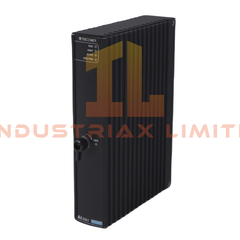
Bently Nevada 147M7136-02-01 Wireless Accelerometer Configured for continuous vibration and temperature acquisition in distributed condition monitoring architectures, the Bently Nevada...
Read more
Configured for continuous vibration and temperature acquisition in distributed condition monitoring architectures, the Bently Nevada 147M7136-02-01, also cataloged as the 147M7136-01 wireless accelerometer, provides direct physical signal acquisition and wireless telemetry transmission within System 1 based monitoring networks. The device integrates a triaxial MEMS accelerometer and temperature sensing element for time-domain and frequency-domain data streaming over WirelessHART.
Hardware Specifications
Parameter
Specification
Model
147M7136-02-01
Brand
Bently Nevada
Origin
USA
Operating Temp
-40 deg C to +85 deg C
Power Consumption
Battery powered, consumption dependent on sampling interval
Sensor Type
Triaxial wireless accelerometer + temperature sensor
Vibration Axes
X, Y, Z orthogonal axes
Frequency Range
0.1 Hz to 20 kHz
Wireless Protocol
WirelessHART (2.4 GHz ISM band)
Encryption
128-bit AES
Bently Nevada Rotor Dynamics and Signal Integrity Characteristics
The signal acquisition chain implements digital conditioning routines aligned with rotor dynamic analysis models, supporting velocity integration, spectral decomposition, and PeakDemod extraction. Cross-channel coherence control is applied across orthogonal axes to reduce inter-axis coupling artifacts in high-speed rotating machinery environments. Wireless packet scheduling is synchronized to maintain deterministic sampling windows under mesh network topology constraints, minimizing phase distortion in FFT reconstruction outputs.
The measurement architecture supports indirect evaluation of shaft-related dynamic behavior through vibration envelope extraction and broadband acceleration profiling, enabling comparative trend analysis against baseline rotor signatures.
Frequently Asked Questions (FAQ)
Q: Does the device support simultaneous streaming of time waveform and FFT data? A: Yes. The internal processing pipeline supports parallel generation of time-domain waveforms and FFT spectral outputs, subject to configured sampling intervals and wireless bandwidth allocation.
Q: What is the limitation of WirelessHART transmission in mesh mode? A: In mesh configuration, latency and update rate depend on hop count and network scheduling. Increased node density may reduce effective transmission frequency due to time-slot arbitration.
Q: Is the device compatible with hot-swapping of the battery? A: Battery replacement is supported via user-replaceable D-size Li-SOCl2 cell. Power interruption occurs during replacement; no internal energy buffer maintains operation during swap.
Field Installation Guidelines
The sensor housing shall be mounted on a rigid machine surface with minimized structural damping between measurement point and casing. Surface preparation must ensure flat mechanical coupling to avoid resonance amplification artifacts.
Wireless gateway placement should maintain line-of-sight where possible, with attention to metallic obstruction zones and rotating equipment shielding effects. Grounding of nearby conductive structures is recommended to reduce electromagnetic interference coupling into the WirelessHART antenna path.
Battery compartment sealing must be verified after installation to maintain ingress protection rating under IP67 conditions. Torque application on enclosure fasteners shall follow manufacturer mechanical retention limits without over-compression of gasket interfaces.