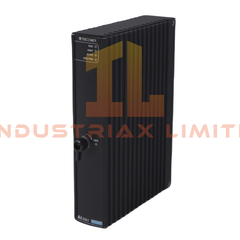
Bently Nevada 134M0389-01 Ranger Pro Wireless Vibration Sensor Configured for condition monitoring data acquisition in System 1 Wireless monitoring networks,...
Read more
Available on working days between 9:00 am to 6:00 pm
Email us: sales2@industriaxplc.com
Available 24/7 for inquiries and support
Description
Bently Nevada 134M0389-01 Ranger Pro Wireless Vibration Sensor
Configured for condition monitoring data acquisition in System 1 Wireless monitoring networks, the Bently Nevada 134M0389-01 (134M0389-01 Ranger Pro Wireless Vibration Sensor) provides direct physical/electrical execution of triaxial vibration and temperature sensing for rotating machinery signal acquisition and wireless telemetry transmission. The device integrates a triaxial MEMS accelerometer and embedded temperature sensing element, outputting digitized condition data via industrial wireless mesh protocols for downstream vibration analysis and diagnostic processing.
Suffix Breakdown & Model Matrix
No documented manufacturer-published suffix segmentation or functional variant decoding is available for the 134M0389-01 ordering code. The model is treated as a single configuration identifier within the Ranger Pro wireless sensor family.
Hardware Specifications
Parameter
Specification
Model
134M0389-01
Brand
Bently Nevada
Origin
USA
Operating Temp
-40 deg C to +85 deg C
Power Consumption
Battery powered (Li-SOCl2 cell, consumption dependent on sampling interval)
Measurement Type
Triaxial vibration + temperature
Frequency Range
0.1 Hz to 20 kHz (typical configuration range)
Acceleration Range
+/-1 g to +/-20 g
Wireless Protocol
ISA100.11a / WirelessHART
Protection Rating
IP67
Battery Life
Up to 5 years (configuration dependent)
Mounting
Stud mount / industrial adhesive
Bently Nevada Rotor Dynamics & Signal Conditioning Behavior
The 134M0389-01 implements internal signal conditioning aligned with rotor dynamics monitoring principles used in Bently Nevada vibration platforms. Triaxial acceleration data is processed to support phase-resolved vibration interpretation, with internal scaling consistent with eddy-current probe reference models used in proximity systems. Gap voltage validation logic (nominal -10 VDC reference framework in proximity-based architectures) is used as a comparative diagnostic baseline when correlating wireless vibration trends with legacy proximity transducer systems. Cross-channel alias suppression is applied to reduce vector interference between orthogonal sensing axes during high-energy transient events in rotating assemblies.
Frequently Asked Questions (FAQ)
Q: Does the 134M0389-01 support hot-swap battery replacement during operation? A: The device uses a sealed lithium thionyl chloride battery assembly. Battery replacement is not designed for in-field hot-swap operation and typically requires sensor removal from service.
Q: What is the wireless update latency under ISA100.11a configuration? A: Transmission latency is network-dependent. In typical mesh configurations, update intervals are defined by network scheduler settings and can range from seconds to minutes per transmission cycle.
Q: Can the sensor operate during firmware upgrade cycles without data interruption? A: During firmware flashing, measurement output is suspended. Data buffering behavior depends on gateway configuration and network buffering depth.
Field Installation Guidelines
Mount on rigid machine housing surface with direct mechanical coupling to avoid attenuation of high-frequency vibration components
Ensure mounting surface is free of paint layers or corrosion scale at contact interface
Maintain line-of-sight or certified mesh routing path for wireless gateway communication stability
Avoid installation near high EMI conductors such as VFD output cabling or switching power buses
Apply standard industrial torque specification for stud mounting to ensure stable frequency response coupling
Verify grounding continuity for machine frame to reduce common-mode electrical noise coupling into sensor housing