
ABB offers industrial automation solutions across drives, control systems, and robotics. Our global inventory ensures fast access to hard-to-find parts. Reduce downtime and maintain continuous production with verified ABB components.
ABB
-


General Electric GE IS200JPDEG1ABB JPDE Power Distribution & Excitation Module
GE IS200JPDEG1ABB JPDE Power Distribution & Excitation Module Configured for regulated DC power distribution and excitation circuit interfacing in the GE Mark VI/VIe Speedtronic control system, the GE IS200JPDEG1ABB (IS200JPDEG1ABB JPDE Power Distribution & Excitation Module) provides direct electrical power routing, isolation, and diagnostic feedback between controller hardware and excitation-related circuits. Hardware Specifications Parameter Specification Model IS200JPDEG1ABB Brand GE Origin United States Weight 0.5 kg Operating Temp -30 to +65 deg C Power Consumption Not specified in available technical data Series Mark VI / Mark VIe Speedtronic Control System Product Type JPDE Power Distribution & Excitation Modules System Role Regulated DC power distribution and excitation interface Input Voltage 28 VDC nominal, operating range 18-32 VDC Output Channels Multiple regulated DC outputs for excitation circuits and I/O packs Isolation Optical/electrical isolation between channels and ground Diagnostics Voltage, current, and fault monitoring functions Connectors Backplane connectors for rack integration and barrier strips for field wiring Mounting Standard Mark VIe rack slot Compliance IEC/UL industrial standards Industrial Control and Power Interface Characteristics The IS200JPDEG1ABB operates as a GE Mark VI/VIe industrial control interface module for power distribution and excitation-related signal management. The module distributes regulated DC power to connected I/O packs and excitation circuits while monitoring electrical conditions through integrated diagnostic functions. The module supports GE control architecture requirements including backplane communication coordination, I/O density scaling, and firmware compatibility between Mark VI/VIe controller components. Electrical isolation between distribution channels and ground reduces interference coupling between control circuits and external field connections. The JPDE module provides monitored power paths for excitation assemblies, allowing controller logic to supervise voltage and current conditions through system diagnostics. Frequently Asked Questions Q: What is the primary function of the IS200JPDEG1ABB module?A: The module distributes regulated DC power and provides excitation circuit interfacing within the GE Mark VI/VIe control architecture. Q: Does the module provide isolation between power distribution channels?A: Yes. The module uses optical/electrical isolation between channels and ground for circuit separation. Q: What diagnostic functions are available on the JPDE module?A: The module provides monitoring of voltage, current, and fault conditions through integrated diagnostic feedback. Field Installation Guidelines Install the IS200JPDEG1ABB module in the assigned Mark VI/VIe rack slot according to the system hardware configuration. Verify backplane connector engagement before applying power. Field wiring should be routed separately from high-current conductors to minimize electromagnetic interference. Confirm terminal connections and cable shielding according to the excitation control cabinet grounding design. Maintain proper grounding of rack assemblies and verify power polarity before energizing the module. After installation, check controller diagnostics and module status indicators to confirm communication and power distribution operation.
$200.00 $100.00
-


General Electric GE IS200ERIOH1ABB Exciter Regulator I/O Board
GE IS200ERIOH1ABB Exciter Regulator I/O Board The GE IS200ERIOH1ABB, also cataloged as the IS200ERIO Exciter Regulator I/O Board, operates as a dedicated hardware component for exciter feedback signal conditioning and regulator interface execution within GE Mark VI Speedtronic turbine control platforms. The board processes generator field voltage, current feedback, and digital status signals between field circuits and control modules. Hardware Specifications Parameter Specification Model IS200ERIOH1ABB Brand GE Origin United States Series Mark VI Speedtronic Module Type Exciter Regulator I/O Board Input Signals Generator field voltage, exciter current, regulator feedback Output Signals Conditioned analog signals to exciter control module Voltage Sensing Range Up to 500 VDC Current Sensing Range Up to 10 ADC Digital I/O Status signals, fault inputs, trip outputs Connectors Ribbon connectors to control rack; screw terminals for field wiring Protection Functions Surge suppression, overvoltage protection, current limiting Mounting Panel mount or DIN-rail mount Weight 0.6 kg Dimensions 200 mm x 150 mm x 35 mm Operating Temp -30 to +65 deg C Humidity Up to 95% RH non-condensing Industrial Control I/O Scaling and Backplane Communication The IS200ERIOH1ABB functions as an interface board within the GE Mark VI Speedtronic control architecture. It performs signal termination, conditioning, and transfer between exciter regulator circuits and the turbine controller. The board supports industrial control I/O density scaling by combining analog feedback channels and digital status interfaces on a single regulator interface assembly. Field signals are converted and conditioned before transmission through the control rack interface, maintaining separation between external wiring and controller electronics. Protection circuits integrated into the board provide signal handling functions including surge suppression, overvoltage limitation, and current limiting for connected excitation circuits. Frequently Asked Questions Q: What type of signals are connected to the IS200ERIOH1ABB?A: The board interfaces with generator field voltage, exciter current feedback, regulator feedback signals, digital status inputs, fault inputs, and trip output signals. Q: Does the IS200ERIOH1ABB directly control exciter power output?A: No. The board provides signal interface and conditioning functions between the exciter regulator and the Mark VI control system. Power regulation is performed by associated excitation control hardware. Q: What installation environment is specified for the IS200ERIOH1ABB?A: The module is specified for operation from -30 to +65 deg C with humidity tolerance up to 95% non-condensing. Field Installation Guidelines Install the IS200ERIOH1ABB according to GE Mark VI control cabinet documentation and verify all terminal assignments before applying excitation system power. Route field voltage and current feedback wiring separately from high-power conductors to minimize electrical interference. Use appropriate shielding practices for low-level feedback circuits and terminate shields according to the cabinet grounding design. Check ribbon cable connections, terminal blocks, and mounting hardware for proper mechanical engagement before commissioning. Verify field wiring polarity and insulation condition during installation and maintenance activities.
$200.00 $100.00
-


General Electric GE IS200ICIAH1ABB Intelligent Control I/O Analog Board
GE IS200ICIAH1ABB Intelligent Control I/O Analog Board Configured for analog signal acquisition and actuator output processing in GE Mark VI Speedtronic turbine control platforms, the GE IS200ICIAH1ABB (IS200ICIAH1 Intelligent Control I/O Analog Board) provides direct physical/electrical execution for thermocouple, RTD, voltage, and current signal interfacing through isolated analog I/O channels. Hardware Specifications Parameter Specification Model IS200ICIAH1ABB Brand GE Origin United States Weight 0.45 kg Dimensions 26.9 x 15.2 x 2.8 cm Operating Temp -20 deg C to +60 deg C Power Consumption Approximately 6.8 W Series Mark VI Speedtronic Turbine Control System Hardware Type Intelligent Control I/O Analog Board (ICIA) Analog Inputs 6 channels, 0-10 V or 4-20 mA; Type J, K, T thermocouple support with CJC Analog Outputs 4 channels, 0-10 V or 4-20 mA Digital Interface VME backplane communication Isolation Optical isolation; 2500 V AC channel-to-channel isolation Protection Overvoltage clamping up to 36 VDC; conformal PCB coating Power Supply Input 5 VDC and 24 VDC from VME backplane Humidity Range 5-95% non-condensing Resolution 16-bit analog acquisition GE Mark VI Analog I/O Signal Processing Characteristics The IS200ICIAH1ABB integrates analog input conditioning and output control functions within the GE Mark VI control architecture. The board supports thermocouple, RTD, voltage, and current signal acquisition with cold junction compensation (CJC) for temperature measurement channels. The module provides isolated analog circuits for field signal separation and noise reduction. The optical isolation design separates field wiring circuits from logic-side processing, while the VME backplane interface provides communication between the I/O board and controller hardware. The ICIA board supports I/O density scaling within Mark VI rack configurations, allowing multiple analog measurement and actuator control channels to be managed through the turbine control network. Firmware flash compatibility and hardware revision matching are required during controller configuration. Frequently Asked Questions Q: What analog signal types are supported by the IS200ICIAH1ABB?A: The board supports 0-10 V, 4-20 mA, and Type J, K, T thermocouple inputs with cold junction compensation. Q: How is field signal isolation implemented on this board?A: The module uses optical isolation between field circuits and logic circuits, with 2500 V AC channel-to-channel isolation. Q: What backplane connection is used for Mark VI system integration?A: The IS200ICIAH1ABB connects through the VME backplane interface within the GE Mark VI rack assembly. Field Installation Guidelines Install the IS200ICIAH1ABB in the designated GE Mark VI VME rack position and verify connector alignment before insertion. Confirm that the backplane power supply connections match the controller cabinet wiring documentation. Terminate analog input and output wiring according to the GE field wiring diagrams. Use shielded cables for low-level analog signals where required, and connect cable shields following the cabinet grounding scheme to reduce electromagnetic interference. Separate thermocouple, RTD, and analog current/voltage signal cables from high-current power wiring and switching circuits. Avoid routing sensitive measurement cables parallel to sources of electrical noise. Inspect the conformal coating and PCB surface before installation. Avoid contact damage to coated areas during handling, connector engagement, and maintenance operations.
$200.00 $100.00
-


General Electric GE IS200ERDDH1ABB EX2100 Exciter Regulator Dynamics Discharge Board
GE IS200ERDDH1ABB EX2100 Exciter Regulator Dynamics Discharge Board The GE IS200ERDDH1ABB, also cataloged as the IS200ERDDH Exciter Regulator Dynamics Discharge Board, operates as a dedicated hardware component for dynamic discharge circuit control within the GE EX2100 excitation control system. Hardware Specifications Parameter Specification Model IS200ERDDH1ABB Brand GE Origin United States Weight 2 lbs Operating Temp -30 deg C to +65 deg C Power Consumption Not specified; powered by 28 VDC nominal supply System Compatibility GE EX2100 excitation control system Product Type Exciter Regulator Dynamics Discharge Board Input Signals Control signals from regulator boards through fiber-optic or electrical interfaces Output Signals Discharge control signals to exciter bridge circuits Power Supply 28 VDC nominal Protection Functions Overvoltage suppression, dynamic discharge path monitoring, fault isolation Status Indication LED indicators for discharge circuit health and fault conditions PCB Protection Conformal coating for dust, moisture, and chemical resistance Humidity Range 5-95% non-condensing Certifications CE, UL, IEC 61010, ATEX Zone 2 GE EX2100 Excitation Control and Discharge Circuit Characteristics The IS200ERDDH1ABB provides dynamic discharge control within the EX2100 excitation architecture by managing energy dissipation paths associated with exciter regulator operation. The board receives control signals from regulator assemblies and provides discharge commands to exciter bridge circuits during shutdown or fault conditions. GE EX2100 systems use coordinated control hardware for generator field regulation and protection. The ERDD board supports firmware flash compatibility within the EX2100 control platform, allowing hardware configuration alignment with supported regulator control assemblies. The board design includes fault isolation and overvoltage suppression functions to control transient electrical conditions. The discharge circuit interface maintains controlled energy transfer between excitation components during abnormal operating states. Frequently Asked Questions Q: What function does the IS200ERDDH1ABB perform in the EX2100 system?A: The board controls dynamic discharge paths for exciter regulator circuits and manages energy dissipation during shutdown and fault sequences. Q: What power supply voltage is required for the IS200ERDDH1ABB?A: The board operates from a 28 VDC nominal supply. Q: Does the board provide protection monitoring functions?A: Yes. The board includes discharge path monitoring, overvoltage suppression, fault isolation, and LED status indication functions. Field Installation Guidelines Install the IS200ERDDH1ABB according to GE EX2100 excitation cabinet hardware procedures. Confirm board orientation, connector seating, and terminal assignments before applying control power. Use proper grounding practices for excitation system wiring. Keep discharge circuit conductors separated from low-level signal wiring to reduce electromagnetic coupling. Maintain cable shielding and grounding according to the excitation control cabinet design requirements. Before system startup, verify LED indicators, regulator communication status, and discharge circuit feedback signals. Confirm that all connected exciter bridge components respond correctly during controlled excitation shutdown testing.
$200.00 $100.00
-


General Electric GE IS200ICBDH1ABB Mark VI Control Base Card
GE IS200ICBDH1ABB Mark VI Control Base Card The GE IS200ICBDH1ABB, also cataloged as the IS200ICBDH1ABB Control Base Card, operates as a dedicated hardware component for analog signal conditioning and field I/O interface processing within GE Mark VI Speedtronic turbine control systems. The card handles sensor acquisition, actuator feedback, and control signal distribution through rack and field wiring interfaces. Hardware Specifications Parameter Specification Model IS200ICBDH1ABB Brand GE Origin United States of America Weight 0.5 kg Operating Temp -30 deg C to +65 deg C Power Consumption Not specified Product Type Control Base Card System Platform Mark VI Speedtronic Gas/Steam Turbine Control System Signal Types LVDT inputs, servo valve outputs, thermocouples, 4-20 mA signals, vibration inputs, generator line signals Connectors JB, JF, JG field wiring connectors and backplane interface Stab-on Connectors CHAS 1, CHAS2, CCOM 2, CCOM1 Ethernet Interfaces J12A, J12B, J11A, J11B Jumper Configuration Current range and circuit selection adjustment, up to 200 mA Isolation Channel-to-channel and channel-to-ground isolation PCB Protection Conformal coating for dust, moisture, and chemical resistance Diagnostic Ports RS-232, Ethernet, and auxiliary connectors Profinet / EtherNet-IP Deterministic Networks and I/O Interface Architecture The IS200ICBDH1ABB provides analog signal processing and field interface functions within the Mark VI control rack architecture. The card receives signals from turbine field devices including LVDT position sensors, thermocouples, vibration monitoring devices, and current loop transmitters, then performs signal conditioning and distribution toward the control processor. The GE Mark VI platform uses deterministic communication paths between control modules and I/O hardware. The Control Base Card supports I/O density scaling through multiple field channels and configurable hardware interfaces. Ethernet diagnostic connections through J12A, J12B, J11A, and J11B provide communication access for system monitoring and maintenance functions. Configurable jumpers allow adjustment of current ranges and circuit selection parameters. Channel isolation design separates field signal paths to reduce electrical interference between measurement channels and improve signal integrity in turbine control applications. Frequently Asked Questions Q: What field signals can the IS200ICBDH1ABB process?A: The card supports multiple turbine control signal types including LVDT feedback, thermocouple inputs, 4-20 mA signals, vibration inputs, and servo valve output interfaces. Q: What communication interfaces are available on the IS200ICBDH1ABB?A: The card includes RS-232, Ethernet diagnostic ports, auxiliary connectors, and dedicated Ethernet jacks identified as J12A, J12B, J11A, and J11B. Q: Does the IS200ICBDH1ABB provide electrical isolation between signal channels?A: Yes. The card provides channel-to-channel and channel-to-ground isolation to separate field signal circuits and reduce noise coupling. Field Installation Guidelines Install the IS200ICBDH1ABB in the designated Mark VI rack slot according to the turbine control cabinet hardware configuration. Verify all field wiring connections at JB, JF, and JG connectors before system power application. Confirm sensor polarity, signal type compatibility, and jumper configuration settings according to the application wiring documentation. Route analog signal cables separately from high-current switching conductors and power cables. Apply proper shield termination and grounding practices for thermocouple, vibration, and low-level analog signal wiring. Inspect Ethernet and auxiliary diagnostic connections before commissioning. Ensure the PCB surface remains protected from conductive contamination, excessive moisture, and installation debris.
$200.00 $100.00
-


General Electric GE IS200ECTBG1ABB Exciter Contact Terminal Board
GE IS200ECTBG1ABB Exciter Contact Terminal Board The GE IS200ECTBG1ABB, also cataloged as the IS200ECTB Exciter Contact Terminal Board, operates as a dedicated hardware component for contact signal interfacing and relay control execution within GE Mark VI IS200 EX2100 excitation control systems. The board manages external dry contact inputs and relay driver outputs through terminal connections. Hardware Specifications Parameter Specification Model IS200ECTBG1ABB Brand General Electric (GE) Origin United States of America (USA) Product Type Exciter Contact Terminal Boards Series Mark VI IS200 / EX2100 Excitation Control System Functional Acronym ECTB Board Type Exciter Contact Terminal Board Weight 1 lbs Operating Temp -30 to +65 deg C Power Consumption Not specified Mounting Rack-mounted exciter cabinet installation Input Signals Multiple dry contact inputs Output Signals Relay driver outputs for trip and control functions Signal Voltage 24 VDC nominal contact input circuits Protection Features Surge suppression and signal isolation PCB Protection Conformal coating Profinet / EtherNet-IP Deterministic Control Interfaces The IS200ECTBG1ABB operates as a terminal interface layer between external field contact circuits and GE excitation control modules. The board transfers discrete status information to the EMIO interface and provides relay driver paths for excitation trip and auxiliary control functions. Within the Mark VI IS200 architecture, the ECTB supports I/O density scaling through multiple contact channels and maintains separated signal paths between field wiring and controller electronics. The terminal board design supports redundant system configurations and coordinated communication with DSPX and related excitation control boards. Frequently Asked Questions Q: What type of field signals can be connected to the IS200ECTBG1ABB?A: The board accepts external dry contact input signals and provides relay driver outputs for excitation trip and control functions. Q: What is the nominal contact input voltage level for this terminal board?A: The specified contact input circuit voltage is 24 VDC nominal. Q: How is the IS200ECTBG1ABB protected for cabinet installation?A: The board uses conformal coating for protection against dust, moisture, and chemical exposure within industrial control cabinets. Field Installation Guidelines Install the IS200ECTBG1ABB in the designated EX2100 exciter cabinet rack location and verify correct connector alignment before operation. Confirm terminal wiring matches the excitation system drawings and signal identification labels. Route dry contact wiring separately from high-voltage switching conductors to reduce electrical interference. Use shielded wiring practices where required by the system design and connect cable shields according to the cabinet grounding scheme. Before replacing or servicing the board, isolate control power and verify that external relay circuits are de-energized. After installation, inspect LED indicators and verify contact input/output status through the Mark VI control interface.
$200.00 $100.00
-


ABB ABB IPSYS01 Harmony Rack Power System Module
Overview The ABB IPSYS01 is a high-reliability power system module developed for ABB INFI 90 and Harmony Rack I/O architectures. The module supplies regulated operating power to rack-based control systems and supports stable performance for processors, communication interfaces, and distributed I/O assemblies. Designed for continuous industrial operation, the module accepts a wide AC/DC input range and provides controlled power distribution through the system backplane. Integrated load-sharing capability allows multiple units to operate in parallel for improved redundancy and power stability in critical process applications. The IPSYS01 is commonly installed in power generation facilities, refinery control systems, and large-scale industrial automation cabinets where uninterrupted control-system power is required. Key Features Regulated power delivery for ABB Harmony and INFI 90 systems Supports both AC and DC input sources Parallel load-sharing operation for redundant configurations Wide operating voltage range for industrial installations Fast power-loss recovery and hold-up capability Designed for continuous rack-based operation Built-in thermal management and protection functions Compatible with Harmony Rack I/O infrastructures Industrial-grade construction for demanding environments Technical Specifications Specification Details Model IPSYS01 Product Type Harmony Rack I/O Power System Module Manufacturer ABB System Compatibility ABB INFI 90 / Harmony Rack Input Voltage Range 102 to 264 VAC DC Input Range 102 to 144 VDC Frequency 50/60 Hz Input Current at 120 VAC 4.3 A Input Current at 240 VAC 2.0 A Input Current at 125 VDC 4.3 A Output Regulation ±0.5% Nominal Voltage Load Regulation Stable from 0% to 100% Load Hold-Up Time 20 ms after Power Loss Heat Dissipation Approximately 175 W Load Sharing Accuracy Within 5% Between Modules Cooling Method Forced-Air Rack Cooling Mounting Style Harmony Rack Slot Installation Dimensions 44.45 × 4.83 × 21.84 cm Weight 2.55 kg System Functionality The IPSYS01 module distributes regulated electrical power across the Harmony rack backplane while maintaining voltage stability during fluctuating load conditions. The module supports redundant installations where multiple power units share the connected system load evenly to improve operational availability. Integrated regulation circuitry and short-duration hold-up capability help maintain stable system operation during transient power interruptions. This functionality is particularly important in process industries where controller downtime can impact plant safety and production continuity. Application Areas Typical deployment environments include: ABB Harmony Rack I/O systems INFI 90 distributed control systems Power plant automation cabinets Process control and refinery systems Industrial communication racks Redundant control-system power architectures High-availability automation platforms FAQ What is the primary purpose of the IPSYS01 module? The IPSYS01 provides regulated system power for ABB INFI 90 and Harmony Rack control platforms. Does the module support redundant operation? Yes. The module supports parallel load sharing between installed units for improved system reliability. Which input voltages are supported? The module accepts 102–264 VAC and 102–144 VDC input ranges. Is the IPSYS01 suitable for continuous industrial operation? Yes. The module is designed for long-term 24/7 operation in industrial automation and process-control environments.
$200.00 $100.00
-


ABB ABB IPMON01 MPSII Power Monitor Module
Overview The ABB IPMON01 MPSII Power Monitor Module is designed to supervise system power conditions and monitor operational status signals within ABB control and power distribution architectures. The module continuously checks incoming supply voltage, fan operation, and fault status conditions to improve system reliability and support preventive maintenance strategies. Integrated alarm and status outputs allow rapid fault notification to host controllers or supervisory systems during abnormal operating conditions. The module is commonly installed in ABB INFI-90 and Harmony environments where uninterrupted power integrity is essential for stable control system operation. Its compact form factor and industrial-grade electrical design make the module suitable for continuous monitoring applications in power generation, process automation, and high-availability industrial systems. Key Features Continuous monitoring of AC and DC system power inputs Supports 120 VAC, 240 VAC, and 125 VDC applications Integrated fan-speed supervision inputs Dedicated power-fail interrupt signaling Open-collector alarm and status outputs Opto-isolated bus alarm interface Real-time fault detection and status reporting Designed for critical process control environments Compatible with ABB MPSII power monitoring systems Technical Specifications Specification Details Model IPMON01 Product Type MPSII Power Monitor Module Manufacturer ABB Input Voltage 120/240 VAC, 125 VDC Power Consumption 24 VA Input Current 0.3 A at 120 VAC Input Current 0.2 A at 240 VAC / 125 VDC Logic Status Inputs 2 Inputs Logic 0 Threshold 0.8 VDC at 10 mA Sink Current Logic 1 Threshold 3.1 VDC at 80 µA Source Current Fan Monitoring Inputs 2 Inputs for Fan Speed Detection Power Fail Interrupt Open Collector Output PFI Logic 1 Output 4.75 to 5.25 VDC Status Output Type Non-Isolated Open Collector Bus Alarm Output Opto-Isolated Open Collector Driven Bus Alarm Voltage 24 VDC Bus Alarm Logic Range 5 to 30 VDC Mounting Style Rack Mounted Dimensions 40.13 × 3.56 × 21.84 cm Weight 0.7 kg Functional Description The IPMON01 module supervises power supply integrity and communicates system health information through dedicated status and alarm outputs. The module can detect low-voltage conditions, cooling fan abnormalities, and general fault states that may affect system stability. Power fail interrupt functionality enables connected controllers to respond immediately during supply interruptions or abnormal voltage fluctuations. The integrated monitoring logic improves operational reliability by supporting early fault identification before critical failures occur. Typical Applications Common industrial applications include: ABB INFI-90 power system supervision Harmony rack voltage monitoring Power supply fault diagnostics Fan failure monitoring in control cabinets Distributed control system protection Process plant power integrity monitoring Industrial automation alarm systems FAQ What is the main function of the IPMON01 module? The IPMON01 monitors power input conditions, fan status signals, and system fault outputs to help maintain stable operation of ABB control systems. Which voltage inputs are supported? The module supports 120 VAC, 240 VAC, and 125 VDC operating environments. Does the module provide alarm signaling? Yes. The unit includes power fail interrupt outputs, status outputs, and opto-isolated bus alarm signaling. Can the IPMON01 monitor cooling fan operation? Yes. The module includes dedicated fan status inputs used for low-speed or failed-fan detection within system cabinets.
$200.00 $100.00
-


ABB ABB IPFAN12 Power System Fan Module for Harmony Racks
Overview The ABB IPFAN12 is an industrial-grade power system fan module engineered for thermal management in ABB INFI-90 and Harmony distributed control systems. The unit delivers continuous forced-air circulation to maintain stable operating temperatures inside automation racks, power cabinets, and control enclosures. Designed for long-term operation in demanding industrial environments, the module helps reduce internal heat buildup around processors, communication interfaces, I/O assemblies, and power supply units. Its centrifugal fan configuration improves airflow efficiency while supporting dependable cooling performance in high-density cabinet installations. The compact assembly is suitable for rack-mounted or panel-mounted installations and is commonly integrated into power generation and process automation infrastructures where thermal stability is critical for system reliability. Key Features Industrial centrifugal fan assembly for continuous cooling Supports ABB INFI-90 and Harmony rack systems Maintains airflow across control and power modules Designed for 24/7 duty-cycle operation Ball-bearing fan construction for extended service life Low vibration and reduced acoustic output Integrated protection against fan stall and overcurrent conditions Suitable for enclosed control cabinet environments Compact mechanical structure for simplified installation Technical Specifications Specification Details Model IPFAN12 Product Type Power System Fan Module Cooling Method Forced-Air Ventilation Fan Design Centrifugal Industrial Fan System Compatibility ABB INFI-90 / Harmony Input Voltage 240 VAC Alternative Variants 24 VDC / 48 VDC Versions Available Power Consumption Approximately 8–20 W Airflow Capacity 40–120 CFM Noise Level Less Than 55 dB Bearing Type Industrial Ball Bearing Protection Rating IP20 Duty Cycle Continuous Operation Mounting Type Panel Mount / Rack Mount Construction Material Metal Industrial Fan Housing Operating Temperature -20°C to +60°C Humidity Range 5% to 95% Non-Condensing Diagnostic Features LED Status Indication on Select Versions Protection Functions Overcurrent and Fan Stall Protection Compliance CE / UL / EMC Standards Weight 10.00 lbs Application Areas The IPFAN12 cooling module is used in industrial systems requiring continuous airflow management and stable thermal operating conditions. Typical applications include: ABB Harmony rack cooling INFI-90 controller cabinet ventilation Power station automation panels High-density I/O rack cooling Industrial process control enclosures Electrical protection system cabinets Distributed control system infrastructure Operational Benefits Efficient thermal regulation is essential for maintaining the reliability of electronic control systems operating continuously in industrial environments. The IPFAN12 helps minimize thermal stress on critical automation hardware by delivering stable airflow throughout cabinet interiors. The centrifugal airflow configuration allows improved pressure performance compared with standard axial fan assemblies, making the module suitable for enclosed racks with restricted ventilation pathways. FAQ What is the main function of the IPFAN12 module? The IPFAN12 is designed to provide forced-air cooling for ABB control system racks and industrial automation enclosures. Which ABB systems use the IPFAN12? The module is commonly installed in ABB INFI-90 and Harmony distributed control system cabinets. Does the module support continuous industrial operation? Yes. The fan assembly is designed for permanent 24/7 operation in industrial control environments. What type of fan mechanism is used? The module uses a centrifugal industrial fan design with ball-bearing construction for reliable long-term airflow performance.
$200.00 $100.00
-


ABB ABB INSEM11 Sequence of Events Master Module for INFI 90
Overview The INSEM11 Sequence of Events Master Module is designed for high-speed event acquisition and chronological event management within ABB INFI 90 and Harmony distributed control architectures. The module supervises and consolidates event information received from remote SOE slave interfaces, assigns precise timestamps, and transfers event records to supervisory controllers, operator stations, or historical databases. This module is commonly deployed in mission-critical environments where accurate disturbance analysis and operational traceability are required. Typical installations include turbine protection systems, electrical substations, emergency shutdown systems, and continuous process automation facilities. The compact hardware design supports reliable long-term operation in industrial control cabinets while providing extensive internal diagnostics and communication integrity monitoring. Key Features High-speed sequence-of-events acquisition and processing Supports chronological event reconstruction during plant disturbances Event buffer capacity up to 4096 records Millisecond and sub-millisecond timestamp capability depending on system architecture Compatible with ABB INFI 90 and Harmony systems Integrated diagnostic monitoring with front-panel status indicators Stable communication through INFI-Net and Harmony bus interfaces Compact low-profile industrial module construction Designed for continuous operation in critical automation environments Technical Specifications Specification Details Model INSEM11 Product Type Sequence of Events Master Module System Compatibility ABB INFI 90 / Harmony Rack Systems Main Function Event Collection, Timestamping, Event Storage Event Capacity Up to 4096 SOE Records Timestamp Resolution Millisecond to Sub-Millisecond Communication Interface INFI-Net / Harmony Bus Input Power 24 VDC via System Backplane Protection Rating IP20 Diagnostic Functions Self-Diagnostics and Fault Detection Status Indication LED Status Indicators Operating Temperature -20°C to +60°C Alternative Operating Range -10°C to +55°C Storage Temperature -40°C to +70°C Relative Humidity 5% to 95% Non-Condensing Mounting Method DIN Rail or Harmony Rack Slot Dimensions 5.1 × 17.8 × 2.5 cm Weight 0.2 kg Application Areas The INSEM11 module is widely used in industrial applications where accurate sequence recording is essential for troubleshooting and operational analysis. Typical installations include: Power plant turbine trip monitoring Generator and protection relay event recording Electrical substation breaker sequencing Distributed process alarm management Safety instrumented systems (SIS) Emergency shutdown sequence analysis Industrial historian and disturbance recording systems System Functionality Within the ABB control architecture, the INSEM11 acts as the primary SOE coordinator. Distributed field events are gathered from remote interfaces and synchronized into a unified event sequence database. The module ensures accurate chronological reporting even during rapid fault conditions or simultaneous alarm activity. This functionality assists engineering personnel in identifying root-cause conditions, validating protection system performance, and meeting operational compliance requirements for power and process industries. FAQ What is the primary purpose of the INSEM11 module? The INSEM11 is used to capture and organize plant event data in chronological order for disturbance analysis, operational diagnostics, and system monitoring. Which ABB systems support the INSEM11? The module is compatible with ABB INFI 90 and Harmony-based control platforms. Does the module support high-precision timestamps? Yes. Depending on the connected system architecture, the module supports millisecond or sub-millisecond event timestamp resolution. Can the INSEM11 operate in harsh industrial environments? The module is designed for industrial automation systems and supports wide operating temperature and humidity ranges suitable for power and process applications.
$200.00 $100.00
-

ABB ABB INPCT01 Plant Loop Computer Transfer Module DCS Card
Product Description The ABB INPCT01 Plant Loop to Computer Transfer Module is designed as a dedicated communication interface within ABB INFI-90 / Symphony distributed control architectures. Its primary role is to establish a stable data bridge between the plant loop control network and external computer systems used for monitoring, analysis, and supervisory control. Developed by ABB, the module is optimized for legacy DCS environments where deterministic communication, protocol conversion, and system reliability are critical for continuous plant operation. The INPCT01 converts plant loop data into standard serial communication formats and supports integration with host systems such as SCADA platforms, data historians, and engineering workstations. It is commonly deployed in industrial facilities requiring robust connectivity between control-level networks and higher-level computing systems. Technical Specifications Communication Interface Protocol support: RS-232 and RS-422 serial communication Function: Plant Loop to host computer data transfer Data handling: Real-time process values, alarms, and system status Indicators: Transmit, Receive, and Fault status LEDs Connector type: D-sub serial interface connectors System Integration Control system: ABB INFI-90 / Symphony platform Role: Communication gateway between Plant Loop and external systems Supported applications: SCADA, HMI, historians, engineering terminals Data processing: Bidirectional communication with error-checking routines Electrical Characteristics Input power: Typically +5 VDC to +24 VDC (system dependent configuration) Backplane dependency: Power sourced from INFI-90 rack architecture Power consumption: Low-power embedded communication module design Mechanical Design Module type: Rack-mounted INFI-90 interface card Dimensions: 17.8 cm × 7.6 cm × 33.0 cm Weight: 0.8 kg Installation: Standard ABB INFI-90 chassis slot Cooling: Passive airflow within cabinet enclosure Functional Overview The INPCT01 serves as a protocol translation and communication gateway within distributed control systems. It ensures reliable data exchange between plant-level control loops and external computing environments by handling: Serial protocol conversion between plant loop and host systems Continuous data streaming for real-time monitoring Supervisory control communication pathways Diagnostic feedback for communication integrity Stable operation in legacy DCS infrastructures Application Scenarios SCADA system integration in legacy ABB control environments Plant-wide data acquisition and monitoring systems Industrial historian data collection and archiving Remote operator and engineering workstation connectivity Power generation and process industry control system interfacing FAQ Q1: What is the primary function of INPCT01?It acts as a communication bridge between the INFI-90 Plant Loop and external computer systems using serial protocols. Q2: Which communication standards are supported?It supports RS-232 and RS-422 serial interfaces for flexible system integration. Q3: Is it suitable for SCADA integration?Yes, it is commonly used for connecting ABB DCS systems to SCADA and monitoring platforms.
$200.00 $100.00
-


ABB ABB INNPM11 Network Processing Communication Module
Product Description The ABB INNPM11 Network Processing Module is a core communication component used within ABB INFI-90 / Symphony distributed control architectures. It functions as a high-speed message processor responsible for data exchange between Controlway, Module Bus, and the INFI-NET network layer. Designed by ABB for deterministic control environments, this module ensures synchronized information flow between controller-level operations and plant-wide communication infrastructure. The INNPM11 operates in conjunction with the INNIS01 interface module to establish a complete communication pathway between process control units and the INFI-NET backbone. It manages cyclic data, exception reporting, system polling, and time synchronization across distributed nodes. Core Technical Specifications System Integration Platform: ABB INFI-90 / Symphony DCS Function: Network processing and protocol handling module Communication layers: Controlway, Module Bus, INFI-NET Network role: Message routing and synchronization processor Communication Performance Controlway speed: 1 Mbaud Module Bus speed: 83.3 kbaud INFI-NET: High-speed serial deterministic data highway Supported messaging: Broadcast, multicast, exception reporting, polling, time sync Processing & Memory RAM: 512 KB onboard memory ROM: 256 KB firmware storage Processing function: Real-time message scheduling and routing Electrical Characteristics Supply voltage: +5 VDC (backplane powered) Power consumption: approx. 10 W (2 A typical load) Isolation: Electrical separation between network and system backplane Mechanical Design Module type: INFI-90 standard plug-in card Dimensions: 27.9 cm × 7.6 cm × 5.1 cm Weight: 0.2 kg Installation: Standard ABB rack slot configuration Cooling: Passive convection within chassis Functional Role in System Architecture The INNPM11 acts as the central message handler for inter-layer communication inside INFI-90 systems. It ensures: Deterministic routing of control and process data Real-time synchronization between distributed controllers Exception-based data transmission for efficiency Stable communication across redundant network topologies Coordination between Controlway-level and plant-level networks Application Areas Distributed process control system communication backbone Real-time controller coordination in industrial plants Data synchronization between HMI and controller networks Integration layer for SCADA and engineering stations High-availability automation system architectures FAQ Q1: What is the primary role of INNPM11?It processes and routes communication between Controlway, Module Bus, and INFI-NET networks in INFI-90 systems. Q2: Does INNPM11 support redundancy?Yes, it is designed to operate within redundant INFI-NET system configurations. Q3: Is it compatible with modern SCADA systems?It can interface through gateway modules for SCADA and historian integration within legacy ABB infrastructures.
$200.00 $100.00
-
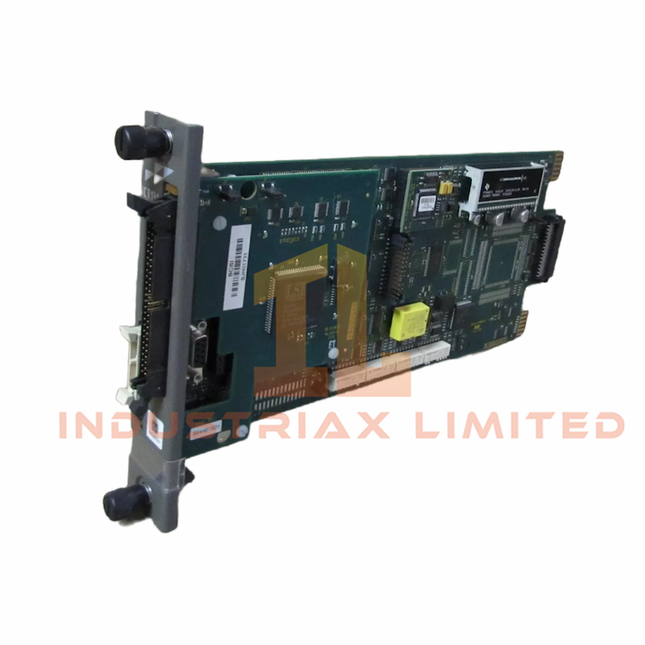
ABB ABB INICT13 INFI-NET Computer Transfer Gateway Module
Product Description The ABB INICT13 INFI-NET Computer Transfer Module is a high-integrity communication interface designed for ABB INFI-90 / Symphony distributed control environments. It functions as a deterministic data bridge between the INFI-NET control network and external computing platforms such as operator stations, engineering systems, and plant data servers. Developed by ABB for mission-critical industrial automation infrastructures, this module is optimized for redundant network architectures where continuous data availability and fault tolerance are required. Unlike earlier INICT generations, the INICT13 features improved processing throughput, enhanced diagnostic reporting, and more stable host communication performance under high network load conditions. It is typically deployed as part of an N-Module rack system and operates within a token-passing INFI-NET architecture, ensuring predictable communication timing and system-wide synchronization. Technical Specifications Network Communication Network architecture: INFI-NET redundant token-passing system Function: Bidirectional gateway between control network and host systems Data types supported: Real-time process variables Alarm and event records System diagnostics and status information Configuration and engineering data Host integration: HMI, SCADA, engineering workstations, historians Electrical Characteristics Backplane supply: +5 VDC (rack-powered) Typical power consumption: 8–12 W Electrical isolation: Network-to-backplane isolation for noise protection Environmental Limits Operating temperature: 0°C to +60°C Storage temperature: –40°C to +85°C Relative humidity: 5–95% non-condensing Cooling method: Passive convection within N-Module chassis Mechanical Design Module format: ABB N-Module plug-in card Mounting: Standard INFI-90 / Symphony rack slot Front panel indicators: Power, network activity, redundancy status LEDs Hot-swap capability: Supported in compatible rack configurations Key Functions Acts as a deterministic gateway between INFI-NET and external computer systems Maintains synchronized data flow in redundant control networks Supports continuous alarm and event propagation to host platforms Enables real-time plant monitoring and supervisory control integration Provides system diagnostics visibility for maintenance and engineering teams System Integration Notes Designed for ABB INFI-90 / Symphony system architecture Compatible with legacy INFI-NET infrastructure upgrades Supports integration with SCADA and historian platforms Works alongside other INICT family modules such as INICT01 and INICT03, offering improved throughput and stability in newer installations Application Scenarios Industrial SCADA system integration for centralized monitoring HMI workstation connectivity in distributed control systems Plant historian data acquisition and archiving Engineering station access for configuration and diagnostics Third-party system interoperability in hybrid automation environments FAQ Q1: Is the INICT13 backward compatible with older INFI-NET systems?Yes, it is designed to operate within existing INFI-NET infrastructures while improving performance and stability. Q2: Does the module support redundancy?Yes, it fully supports redundant INFI-NET network configurations for high availability systems. Q3: Can it be hot-swapped?In supported N-Module racks, the module can be replaced without full system shutdown.
$200.00 $100.00
-


ABB ABB INICT03 Computer Network Interface Module
Product Overview The ABB INICT03A INICT03 module is a communication interface designed for ABB INFI-90 / Symphony distributed control systems. It connects the INFI-NET control network with external computer systems including operator workstations, engineering stations, and data servers. It is installed in an ABB N-Module rack and functions as a central data exchange node, enabling plant-wide access to real-time process information and system status. System Function Description This module operates as a network bridge between the INFI-NET token-passing control network and host computing platforms. It supports continuous and synchronized data exchange across industrial automation layers. Main functions include Transfer of real-time process values from controllers to host systems Transmission of alarms and event messages for supervisory monitoring Delivery of system diagnostics and status information Bidirectional communication for configuration and control support It is commonly used in SCADA systems, historians, and engineering environments where reliable data access is required. Technical Specifications Communication Interface Network Type: INFI-NET redundant token-passing architecture Communication Mode: Bidirectional data transfer Data Types: Process values, alarms, events, diagnostics System Integration: HMI, SCADA, historian, engineering tools Electrical Characteristics Power Supply: +5 VDC via N-Module backplane Power Consumption: Approximately 10 W Mechanical Design Module Type: ABB N-Module plug-in card Mounting: INFI-90 / Symphony rack compatible Connector Type: Backplane edge connector Indicators: LED status for network and module diagnostics Environmental Conditions Operating Temperature: 0°C to 60°C Storage Temperature: -40°C to 85°C Humidity: 5% to 95% non-condensing Cooling: Natural convection within rack Physical Data Weight: 2.01 lbs Key Features Provides communication bridge between control network and computer systems Supports redundant INFI-NET architecture Enables deterministic real-time data exchange Designed for continuous industrial operation Compatible with rack-based hot-swap configurations depending on system setup Application Areas Distributed control system integration Plant monitoring and visualization systems SCADA supervisory control environments Engineering configuration stations Industrial data acquisition and historian systems
$200.00 $100.00
-


ABB ABB INBIM02 Bus Interface Module
Product Description The INBIM02 is a communication interface module used in ABB Symphony and INFI-90 distributed control systems. It functions as a bridge between the Module Bus (M-Bus) and the Controlway network, enabling coordinated data exchange between controllers, I/O modules, and operator stations. It is designed for ABB N-Series rack installations and is commonly applied in continuous process industries where reliable and deterministic system communication is required. Communication Function The INBIM02 manages data transfer between two core system layers: Module Bus (M-Bus) for local I/O and controller communication Controlway for system-level data distribution Real-time bidirectional exchange of process data and control commands Synchronization of distributed controller states Transmission of diagnostics and fault information across the system This ensures stable communication integrity across ABB INFI-90 architectures. Electrical Characteristics Supply voltage: 5 VDC via INFI-90 backplane Auxiliary support: ±15 VDC system rail depending on configuration Power consumption: approximately 9.5 VA (revision dependent) Interface: Proprietary INFI-90 high-speed backplane connection Isolation: Provided through rack-level system architecture System Integration The module operates as a communication gateway within ABB Symphony / INFI-90 systems. Primary function: Bridge between Module Bus and Controlway System role: Distributed communication synchronization Data handling: Deterministic real-time exchange of control and status data Installation: ABB N-Module rack slot Application: Legacy ABB distributed control systems Mechanical Design Form factor: ABB N-Series plug-in module Mounting type: INFI-90 rack installation Weight: 0.80 lbs Front panel: LED indicators for status and communication activity Cooling: Passive convection within rack enclosure Connector: Standard INFI-90 edge backplane interface Environmental Specifications Operating temperature: 0°C to 60°C Storage temperature: -40°C to 85°C Humidity: 5% to 95% non-condensing Designed for continuous industrial duty operation Key Features Communication bridge between Module Bus and Controlway Deterministic real-time system data exchange Integrated diagnostics and fault reporting Stable operation in distributed control environments Compatible with ABB Symphony / INFI-90 architecture Application Areas Power generation control systems Petrochemical and refinery automation Heavy industrial process control Continuous production facilities ABB INFI-90 system maintenance and spare replacement FAQ Q1: Is INBIM02 a controller module?No. It is a communication interface module used only for system networking. Q2: Can it operate outside ABB systems?No. It is designed specifically for ABB Symphony / INFI-90 rack-based systems. Q3: What happens if the module fails?Communication between Module Bus and Controlway will be disrupted, affecting system synchronization.
$200.00 $100.00
-

ABB ABB IMTSA01 Turbine Speed Adapter Module
Product Description The IMTSA01 is a turbine speed interface module used in ABB Bailey INFI-90 control systems. It is engineered to convert high-frequency pulse signals from turbine speed sensors into stable digital values for monitoring, control, and protection applications in power generation environments. It is commonly deployed in steam and gas turbine systems where accurate rotational speed feedback is required for governor control and overspeed protection logic. Signal Processing and Measurement The IMTSA01 supports multiple industrial turbine speed sensing methods and performs reliable signal conditioning and frequency conversion. Operating speed range: 0–10,000 RPM (typical application range) Input frequency range: 100 Hz–2 kHz depending on configuration Measurement accuracy: ±0.1% of full scale under calibrated conditions Supported sensor types: Magnetic pickup sensors Active proximity probes Signal processing: Pulse shaping, filtering, and noise suppression for stable output Electrical Characteristics Supply voltage: 24 VDC nominal Current consumption: up to 0.32 A Power interface: INFI-90 backplane or system terminal supply depending on installation Output signal: Digitized speed data for control system processing Electrical isolation: Industrial-grade isolation between field input and control circuitry System Integration The module integrates directly into ABB INFI-90 and Symphony Plus architectures as a turbine speed input interface. Function role: Real-time turbine speed acquisition Control usage: Governor control loops and overspeed protection systems System role: Input module for turbine monitoring and diagnostics Data exchange: Backplane-based communication within ABB DCS architecture Environmental Specifications Operating temperature: -20°C to +60°C Storage temperature: -40°C to +85°C Humidity range: 0–95% non-condensing Designed for continuous operation in industrial environments Mechanical Design Mounting type: ABB INFI-90 rack-mounted module Dimensions: 120 × 100 × 35 mm (variant dependent) Weight: 0.5 kg Construction: Rugged industrial-grade electronics for long-term reliability Installation: Plug-in module compatible with standard INFI-90 racks Key Features High-precision turbine speed measurement Stable operation in electrically noisy environments Compatibility with magnetic pickup and proximity probe sensors Fast response for protection-level control systems Designed for legacy ABB turbine control infrastructure Application Areas Steam turbine control systems Gas turbine monitoring and protection Power plant generator speed supervision Overspeed protection and emergency shutdown systems Spare part replacement in ABB INFI-90 installed base systems FAQ Q1: Does IMTSA01 support Ethernet or modern industrial networks?No. It is designed for ABB INFI-90 systems and communicates via backplane integration. Q2: What sensors are supported?It supports magnetic pickup sensors and active proximity probes depending on system configuration. Q3: Can it be used in new control system installations?It is mainly intended for maintenance and replacement in existing ABB legacy systems.
$200.00 $100.00
-


ABB ABB IMRI002 Remote I/O Slave Module
Overview The IMRIO02 is a remote I/O slave interface module designed for ABB Bailey INFI-90 and Network 90 distributed control platforms. It functions as a communication node that collects field-level I/O signals from remote termination units and transfers process data to the central controller through ABB’s proprietary Remote I/O network. This module is intended for rack-based N-Series installations used in legacy ABB distributed control environments requiring extended I/O reach and stable deterministic communication. System Role and Function The IMRIO02 operates as a dedicated remote I/O communication interface within the INFI-90 architecture, supporting: Aggregation of distributed analog and digital I/O signals Real-time data exchange with the main controller System diagnostics reporting for remote I/O segments Coordination of multi-drop I/O network communication Integration with ABB N-Series rack-based termination hardware Communication Characteristics Protocol: ABB proprietary Remote I/O (RIO) bus Network structure: Multi-drop distributed I/O topology Data exchange: Cyclic process data plus diagnostic messaging Integration scope: INFI-90 / Network 90 control systems Compatibility: ABB N-Module rack and field termination assemblies Electrical Specifications Supply voltage: 5 VDC via rack backplane Power consumption: approximately 5–8 W typical Interface type: High-speed backplane communication connection Electrical isolation: Provided at system rack level Mechanical Construction Module format: ABB N-Series plug-in card design Installation method: Standard INFI-90 rack slot mounting Weight: 0.85 lbs Front panel: LED indicators for module status and communication activity Cooling: Passive convection within rack enclosure Environmental Limits Operating temperature: 0°C to 60°C Storage temperature: -40°C to 85°C Humidity range: 5% to 95% non-condensing Designed for continuous industrial duty operation Application Areas Thermal and hydro power generation control systems Refinery and petrochemical process automation Heavy industrial distributed control systems Legacy ABB DCS maintenance and spare part replacement Expansion of remote I/O capacity in existing INFI-90 installations
$200.00 $100.00
-


ABB ABB IMMFP03R Multi-Function Processor Module
Product Description The IMMFP03R is a high-performance control processor designed for ABB Bailey INFI 90 and Net 90 distributed control architectures. It functions as the central execution unit responsible for real-time control processing, system coordination, and communication management across I/O subsystems. Engineered with redundancy capability, this module supports hot-standby configuration, allowing continuous operation in mission-critical environments such as power generation units, refining facilities, and large-scale process plants. Core Processing Functions Executes regulatory control algorithms (PID and advanced loop control) Handles sequential logic and batch process execution Manages real-time I/O data acquisition and processing Supports peer-to-peer communication across INFI 90 networks Coordinates system-wide control strategy execution Operates as primary or backup controller in redundant setups System Architecture & Redundancy Redundancy type: Hot-standby dual-module configuration Failover behavior: Automatic switchover in sub-second range Synchronization: Continuous state mirroring between paired controllers Communication backbone: INFI-NET high-speed control network Designed for uninterrupted process operation in critical systems Memory & Processing Resources 32-bit industrial processor architecture Program memory: EPROM / Flash-based storage Runtime memory: RAM with battery-backed retention Non-volatile memory support for configuration and logic retention Deterministic scan-based execution cycle for real-time control Communication Capabilities INFI-NET system-wide communication bus Direct module bus interface to INFI 90 I/O racks Supports analog, digital, and specialty I/O modules Peer-to-peer data exchange between controllers Integrated diagnostics and communication watchdog monitoring Electrical Characteristics Logic supply: +5 V DC (~2–3 A typical load) Auxiliary supply: +24 V DC (~0.1–0.2 A typical load) Backplane-powered architecture Internal isolation for signal integrity and noise suppression Power-efficient design (~10 W typical consumption) Environmental Specifications Operating temperature: 0°C to +60°C Storage temperature: –40°C to +85°C Relative humidity: 5–95% non-condensing Industrial-grade EMI/EMC resistance for harsh environments Physical Design Standard ABB INFI 90 rack-mounted processor format Dimensions: 350 × 260 × 70 mm Weight: 1.2 kg Installed directly into INFI 90 system chassis slot Application Areas Thermal and nuclear power generation control systems Petrochemical refining process automation Water treatment and utility control networks Continuous industrial production environments High-availability distributed control systems FAQ What does the “R” in IMMFP03R mean?It indicates redundancy support, enabling hot-standby operation with a paired controller. Can this module operate alone?Yes, it can function as a single controller, but redundancy is recommended for critical systems. Is it compatible with all INFI 90 I/O modules?Yes, it supports full integration with standard INFI 90 analog, digital, and specialty I/O modules.
$200.00 $100.00
-

ABB ABB IMICV01 PROFIBUS Communication Interface Module
Product Description The IMICV01 is a dedicated fieldbus communication interface designed for ABB S800 I/O remote I/O architectures. It operates as a PROFIBUS-DP slave device, enabling deterministic, high-speed cyclic data transfer between distributed I/O stations and a central controller such as ABB AC 800M. Within a distributed control system, the module functions as a communication bridge for analog and digital I/O data, ensuring synchronized exchange across PROFIBUS networks in real-time process control environments. System Integration & Functional Role PROFIBUS-DP slave interface for ABB S800 I/O stations Cyclic data exchange with DP master controllers such as AC 800M Aggregates signals from AI, AO, DI, and DO modules within remote racks Supports scalable expansion of distributed I/O systems Maintains stable communication across multi-node fieldbus networks Designed for continuous operation in process-critical applications Communication Specifications Protocol: PROFIBUS-DP (EN 50170 compliant) Device role: DP slave node Data rate: up to 12 Mbps Physical layer: RS-485 differential signaling Connector: 9-pin D-Sub fieldbus interface Address setting: DIP-switch configurable (typical 1–99, extended up to 126 depending on system configuration) Electrical Characteristics Supply voltage: 24 V DC via S800 I/O backplane Power consumption: supplied internally by rack system Designed for low-noise digital communication stability Integrated shielding and grounding for industrial EMI protection Diagnostics & Monitoring Front-panel LED indicators: Power status RUN (operating state) BUSF (bus fault condition) Continuous communication status monitoring Fault detection support for fieldbus diagnostics Environmental & Mechanical Specifications Operating temperature: 0°C to +60°C Humidity range: 5–95% RH, non-condensing Industrial-grade EMC immunity design Mounting: S800 I/O rack slot installation Weight: 0.75 lbs Application Areas Distributed I/O communication systems Power generation control networks Petrochemical and refining automation Remote field device integration PROFIBUS-DP-based industrial control systems FAQ Is IMICV01 a controller module?No, it is a communication interface module used as a PROFIBUS-DP slave within S800 I/O systems. Which controllers are supported?It is typically used with ABB AC 800M and other PROFIBUS-DP master controllers. Does it operate independently?No, it must be installed within an ABB S800 I/O station to function.
$200.00 $100.00
-


ABB ABB IMHSS05 Hydraulic Servo Module INFI 90 Symphony Unit
Product Description The IMHSS05 is a dual-function control module used within ABB Symphony Plus, Harmony Rack, and INFI 90 distributed control platforms. It is engineered to manage electro-hydraulic actuation loops and, in certain system configurations, support high-speed serial communication interfaces. In hydraulic control applications, the module operates as a precision interface between the control system and servo-driven actuators, ensuring accurate positioning of turbine valves and hydraulic systems under dynamic load conditions. It is widely implemented in power generation units, steam turbine governors, and industrial fluid control systems requiring fast and stable closed-loop response. System Role & Functional Design Electro-hydraulic servo valve control for closed-loop positioning systems Supports feedback integration from LVDT, RVDT, and 4–20 mA sensors Converts control commands into high-precision hydraulic actuator signals Optional use as serial communication interface (RS-232 / RS-422 / RS-485 depending on configuration) Compatible with ABB INFI 90, Net 90, and Symphony Plus architectures Designed for redundant and safety-critical turbine control loops Electrical Characteristics Logic supply: +5 V DC (approx. 4.7 VA typical consumption) Field supply: +24 V DC (approx. 13.7 VA typical consumption) Backplane-powered module integration within Harmony/INFI rack systems Low-noise signal design optimized for control stability Control & Feedback Processing Accepts hydraulic position feedback via LVDT / RVDT transducers Supports analog feedback signals including 4–20 mA loops Generates servo-level output signals for hydraulic valve actuation High-speed response architecture suitable for turbine transient control Designed for deterministic closed-loop performance in critical systems Environmental & Mechanical Specifications Operating temperature: 0°C to +60°C Storage temperature: –40°C to +85°C Humidity tolerance: 5–95% RH non-condensing Industrial-grade EMI resistance and vibration durability Standard Harmony Rack module format Application Areas Steam turbine control and valve positioning systems Hydro turbine governor and hydraulic regulation loops Industrial electro-hydraulic actuation systems Process control environments requiring fast feedback response Legacy ABB INFI 90 modernization and system integration projects FAQ Is IMHSS05 only a hydraulic control module?Primarily yes, but certain system configurations also enable it to function as a serial communication interface module. Can it be used in redundant systems?Yes, it supports redundant configurations for turbine protection and high-reliability control architectures. What feedback devices are supported?It supports LVDT, RVDT, and standard 4–20 mA analog position feedback devices.
$200.00 $100.00
-

ABB ABB IMFAI02 Analog Input Module
Overview The ABB IMFAI02 is a high-speed analog input module designed for ABB S+ Turbine systems. It is engineered to capture fast-changing analog process signals and convert them into high-resolution digital data for turbine control and monitoring applications. With a 1 kHz sampling capability and 16-bit resolution, the module is optimized for dynamic measurement environments where rapid signal variation and precise data acquisition are critical. Functional Role The IMFAI02 operates as a fast analog acquisition interface within turbine and process control architectures. It continuously samples field analog signals, conditions them, and transmits processed data to the control system for real-time analysis and regulation. It is typically used in high-speed monitoring loops where traditional analog modules are insufficient due to slower scan rates. Technical Specifications Parameter Specification Brand ABB Model IMFAI02 Product Type High-Speed Analog Input Module System Compatibility ABB S+ Turbine Input Channels 8 Analog Inputs Sampling Rate Up to 1 kHz Resolution 16-bit high-resolution conversion Signal Type Analog process signals (voltage/current via conditioning interface) Input Function Fast acquisition and signal digitization Measurement Accuracy High precision turbine-grade measurement (system dependent) Backplane Interface S+ Turbine system bus Power Supply Provided via system rack Isolation Electrical isolation between input and system bus EMI Protection Industrial-grade electromagnetic compatibility Operating Temperature -20°C to +60°C Storage Temperature -40°C to +85°C Humidity Range 5–95% RH non-condensing Dimensions 27.9 × 7.6 × 35.6 cm Weight 0.8 kg System Integration The IMFAI02 integrates into ABB S+ Turbine control platforms, providing high-speed analog data acquisition for turbine performance monitoring, protection logic, and dynamic process control loops. It communicates directly with system processors via the turbine control backplane. Industrial Applications This module is commonly deployed in: Gas and steam turbine control systems Power generation monitoring systems High-speed process control loops Industrial energy management systems Turbomachinery protection and diagnostics Precision analog signal acquisition environments Engineering Characteristics The IMFAI02 is designed for fast transient signal environments where conventional analog modules cannot meet timing requirements. Its 1 kHz sampling capability enables accurate capture of rapid process variations, while 16-bit resolution ensures measurement precision for turbine-grade applications. FAQ What is the main function of the IMFAI02 module? The IMFAI02 is used to acquire and digitize high-speed analog signals in ABB S+ Turbine systems. How fast is its sampling rate? It supports up to 1 kHz sampling for rapid signal acquisition. Is it suitable for turbine applications? Yes. It is specifically designed for turbine control and monitoring environments. How many input channels does it support? It provides 8 high-speed analog input channels.
$200.00 $100.00
-


ABB ABB IMDSO02 Digital Output Module 16 Channel INFI 90 Slave
Overview The ABB IMDSO02 is a 16-point digital output module designed for Bailey INFI 90, Net 90, and Symphony Harmony distributed control platforms. It translates controller commands into discrete field output signals for driving external electrical devices in industrial control environments. It is engineered for high-reliability switching applications where stable actuation, electrical isolation, and fault protection are required for continuous operation. Functional Role The IMDSO02 operates as an output interface between the INFI 90 control system and field-level actuators. It receives digital commands from the system backplane and energizes 24 VDC output channels to control devices such as relays, solenoids, indicators, and interlocking circuits. Each channel operates independently, allowing distributed control of multiple field devices within a single module. Technical Specifications Parameter Specification Brand ABB Model IMDSO02 Product Type Digital Output Slave Module System Compatibility Bailey INFI 90 / Net 90 / Symphony Harmony Output Channels 16 Digital Outputs Output Type 24 VDC sourcing outputs Output Voltage Range 18–30 VDC Maximum Output Current Up to 0.5 A per channel (typical design reference) Field Power Requirement External 24 VDC supply Backplane Power Supplied via INFI 90 rack Isolation Optical isolation (channel-to-channel and channel-to-system) Protection Features Overcurrent protection, short-circuit protection, transient suppression Switching Technology Solid-state output drivers Diagnostic Indicators LED per channel + module power status Self Diagnostics Output driver health monitoring and fault reporting Communication Interface INFI 90 system bus Operating Temperature 0°C to +60°C Storage Temperature -40°C to +85°C Humidity Range 5–95% RH non-condensing EMI/EMC Protection Industrial-grade noise immunity design Dimensions 350 × 260 × 70 mm Net Weight 1.0 kg Mounting Type INFI 90 rack slot module System Integration The IMDSO02 integrates directly into ABB INFI 90 architectures through the rack backplane, enabling synchronized digital output control across distributed system modules. It supports coordinated actuation in large-scale automation environments requiring deterministic output behavior. Industrial Applications Typical deployment areas include: Power plant control systems Petrochemical processing facilities Industrial automation lines Motor and actuator control systems Safety interlock and shutdown circuits Legacy ABB INFI 90 system maintenance and upgrades Engineering Characteristics The IMDSO02 is designed for high-noise and high-load environments. Its optical isolation architecture protects system electronics from field-side disturbances, while integrated protection circuits ensure safe operation under overload or short-circuit conditions. FAQ What is the purpose of the IMDSO02 module? The IMDSO02 is used to control external devices by converting INFI 90 system commands into 16-channel 24 VDC digital outputs. What devices can it drive? It can control relays, solenoids, contactors, indicators, and interlocking circuits. Does it include protection features? Yes. It includes short-circuit protection, overcurrent protection, and transient suppression. Is it suitable for continuous industrial operation? Yes. It is designed for 24/7 operation in harsh industrial environments.
$200.00 $100.00
-


ABB ABB IMDSI15 16 Channel Digital Input Module 24VDC INFI 90
Overview The ABB IMDSI15 is a 16-channel digital input slave module designed for use in Bailey INFI 90, Net 90, and Symphony Harmony distributed control systems. It is engineered to collect discrete field signals and convert them into processed digital data for system-level monitoring and control. This module is commonly applied in environments requiring fast, reliable, and electrically isolated signal acquisition under harsh industrial conditions. Functional Role The IMDSI15 acts as an interface between field devices and the INFI 90 system bus. It monitors 24 VDC or dry-contact input signals, conditions them through optical isolation, and transmits stable digital states to the control system. Its high-speed response capability makes it suitable for interlocking logic, safety monitoring, and real-time process supervision. Technical Specifications Parameter Specification Brand ABB Model IMDSI15 Product Type Digital Input Slave Module System Compatibility Bailey INFI 90 / Net 90 / Symphony Harmony Input Channels 16 Digital Inputs Input Type 24 VDC discrete or dry contact Operating Voltage Range 18–30 VDC Input Current ~7 mA per channel @ 24 VDC Response Time ≤ 5 ms Isolation Type Optical isolation (channel-to-channel & system bus) Protection Features Surge suppression, transient voltage protection Backplane Power Supplied via INFI 90 rack Diagnostic Indicators Front-panel LED status per channel + power LED Communication Interface INFI 90 system bus Operating Temperature 0°C to +60°C Storage Temperature -40°C to +85°C Humidity Range 5–95% RH non-condensing Environmental Protection IP20 (module-level protection) Dimensions 178 × 51 × 228 mm Weight 0.5 kg Mounting Type INFI 90 rack slot / Bailey module chassis System Integration The IMDSI15 integrates directly into ABB INFI 90 architecture, enabling consistent digital input acquisition across distributed control environments. It communicates with system processors through the backplane, ensuring synchronized signal updates across control logic layers. Industrial Applications Typical use cases include: Power plant control and monitoring systems Petrochemical process automation Industrial safety interlock systems Manufacturing line control systems Compressor and turbine monitoring Distributed control system (DCS) maintenance and upgrades Engineering Characteristics The IMDSI15 is designed for high-noise electrical environments. Optical isolation protects system electronics from field-side disturbances, while fast input scanning ensures accurate detection of rapid signal transitions in critical control applications. FAQ What is the function of the IMDSI15 module? The IMDSI15 collects and processes 16-channel digital input signals and transmits them to ABB INFI 90 control systems. What types of inputs does it support? It supports 24 VDC discrete signals and dry-contact inputs. Is the module suitable for fast switching applications? Yes. With response times up to 5 ms, it is suitable for interlocks and real-time monitoring. Does it include diagnostic indicators? Yes. Each channel has LED status indication along with a power status indicator.
$200.00 $100.00
-


ABB ABB IMDS122 Digital Input Module 16 Channel INFI 90
Overview The ABB IMDS122 is a 16-channel digital signal acquisition module developed for Bailey INFI 90 and Net 90 distributed control architectures. It is designed to interface field-level digital devices with ABB control processors, converting discrete input states into reliable system-readable signals. The module is commonly deployed in environments requiring fast switching detection, stable signal conditioning, and robust electrical isolation under industrial operating conditions. Functional Role The IMDS122 continuously monitors multiple digital input points from field devices such as switches, relay contacts, and logic outputs. It processes these signals and transmits standardized input data to INFI 90 system controllers for real-time control and monitoring. It is optimized for applications where consistent response time and signal integrity are critical. Technical Specifications Parameter Specification Brand ABB Model IMDS122 Product Type Digital Input Module System Compatibility Bailey INFI 90 / Net 90 Input Channels 16 Digital Inputs Input Signal Types Dry contact, transistor logic Input Voltage (Typical) 24 VDC system level Response Time ≤ 10 ms Power Consumption ~1.5 W (low-power variant reference) Communication Interface INFI 90 system bus Optional Protocol Support Modbus RTU (application-dependent) Isolation Electrical isolation between channels and system bus Noise Immunity Industrial-grade EMI/EMC protection Operating Temperature -20°C to +70°C Storage Temperature -40°C to +85°C Humidity Range 5–95% RH non-condensing Mounting Type DIN rail / rack-mounted (configuration dependent) Physical Dimensions 120 × 150 × 80 mm Weight 0.45 kg System Integration The IMDS122 integrates directly into ABB INFI 90 control environments, providing standardized digital input handling for system processors. It is compatible with distributed control communication structures and supports consistent signal exchange across automation subsystems. Industrial Applications This module is typically used in: Power plant monitoring systems Petrochemical process control networks Manufacturing automation lines Utility and energy management systems Industrial safety interlock circuits Legacy ABB INFI 90 system maintenance Engineering Characteristics The IMDS122 is engineered for stable performance in electrically noisy environments. Its isolation architecture reduces signal interference, while its fast response time ensures accurate detection of rapid input transitions in control applications. FAQ What is the main function of the IMDS122? The IMDS122 is used to acquire and process digital input signals from field devices in ABB INFI 90 systems. How many inputs does it support? It provides 16 independent digital input channels. What types of signals are supported? It supports dry contact inputs and transistor-based logic signals. Is it suitable for harsh environments? Yes. It is designed for industrial environments with wide temperature tolerance and strong EMI protection.
$200.00 $100.00


You have seen 24 out of 596 products