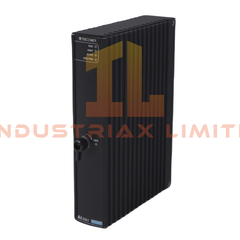
Yokogawa KS1-20 Interface Signal Cable The Yokogawa Electric Corporation KS1-20 (KS1-20) Interface Signal Cable serves as a dedicated physical interconnect...
اقرأ المزيد
متاح في أيام العمل من الساعة 9:00 صباحًا إلى 6:00 مساءً
راسلنا عبر البريد الإلكتروني: sales2@industriaxplc.com
متاح 24/7 للاستفسارات والدعم
وصف
Yokogawa KS1-20 Interface Signal Cable
The Yokogawa Electric Corporation KS1-20 (KS1-20) Interface Signal Cable serves as a dedicated physical interconnect assembly for CENTUM VP / CS 3000 I/O signal routing, executing direct pin-to-pin electrical transfer between high-density field I/O modules and system-side terminal assemblies. Configured for 40-pin dual-ended architecture, it supports deterministic signal continuity for multi-channel analog and digital I/O backplane extensions within Yokogawa DCS hardware chains.
SuffixBreakdown & Model Matrix
KS1: Interface signal cable family designation for DCS I/O interconnection
-20: Factory-defined cable length class of 20 m
No additional functional suffix decoding is applicable beyond mechanical length and assembly revision coding
Hardware Specifications
Parameter
Specification
ModelBrand
Yokogawa KS1-20
Origin
Japan
Weight
Approx. 2.0 kg
Dimensions
20 m length (factory assembly)
OperatingTemp
-20 degC to +70 degC
PowerConsumption
Passive component (no electrical consumption)
Connector Type
40-pin male to 40-pin male
Cable Structure
20-pair (40-core) shielded twisted assembly
System Compatibility
CENTUM VP, CENTUM CS 3000, ProSafe-RS
Signal Interface
Multi-channel analog/digital I/O interconnect
Process Signal Integrity Characteristics (DCS Interconnect Layer)
Within Yokogawa Electric Corporation DCS architectures, the KS1-20 cable maintains controlled impedance continuity across high-density signal lanes linking FIO modules and termination boards. Shielding architecture supports channel-to-channel isolation behavior consistent with low-level analog transmission (4-20 mA loop signals and low-voltage discrete I/O). The multi-pair layout minimizes cross-talk coupling between adjacent signal groups during extended cabinet routing, particularly in dense CENTUM I/O nests where parallel signal bundling is present. Ground reference continuity is maintained through overall braid shielding termination at cabinet entry points.
Frequently Asked Questions
Q1: Can KS1-20 be hot-swapped during system operation? A1: No. The cable is a passive interconnect assembly without hot-swap design. System power isolation is required before connector disengagement to avoid pin-level transient coupling.
Q2: Does the 40-pin interface support mixed analog and digital signals simultaneously? A2: Yes. The pin matrix is designed for mixed I/O allocation, provided mapping follows CENTUM I/O assignment rules at the module level.
Q3: Is shielding continuity dependent on both connector ends? A3: Yes. Shield termination integrity depends on proper mating at both 40-pin connectors and cabinet grounding reference points.
Field Installation Guidelines
Maintain minimum bend radius consistent with multi-pair shielded industrial cables to prevent conductor fatigue at connector neck regions
Ensure full 40-pin connector seating before applying strain relief clamps