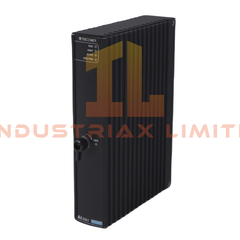
Honeywell TC-RPFM01 Fiber Module Configured for ControlNet fiber-based communication interfacing in distributed industrial control networks, the Honeywell TC-RPFM01 (TCRPFM01 Fiber...
اقرأ المزيد
متاح في أيام العمل من الساعة 9:00 صباحًا إلى 6:00 مساءً
راسلنا عبر البريد الإلكتروني: sales2@industriaxplc.com
متاح 24/7 للاستفسارات والدعم
وصف
Honeywell TC-RPFM01 Fiber Module
Configured for ControlNet fiber-based communication interfacing in distributed industrial control networks, the Honeywell TC-RPFM01 (TCRPFM01 Fiber Module) provides direct physical/electrical execution of optical signal transmission between ControlNet nodes and system backplane interfaces. The module is designed as a discrete network media interface supporting 5 VDC backplane power and 4 A current class operation within modular automation architectures.
Suffix Breakdown & Model Matrix
The TC-RPFM01 is documented as a single orderable hardware identifier. No validated manufacturer-published suffix segmentation or functional subcode matrix is available. Internal code “TCRPFM01” is used as an alternate catalog reference.
Hardware Specifications
Parameter
Specification
Model
TC-RPFM01 / TCRPFM01
Brand
Honeywell
Origin
United States
Weight
0 lbs 4.8 oz (0.1 kg)
Dimensions
4.3 in x 4.3 in x 2.8 in (10.9 cm x 10.9 cm x 7.1 cm)
Operating Temp
Not specified
Power Consumption
5 VDC backplane, 4 A class (as stated)
Module Type
ControlNet Fiber Communication Module
Status
Discontinued by manufacturer
Fiber Communication & Channel Isolation Architecture
As part of Honeywell ControlNet-compatible architectures, the TC-RPFM01 implements optical fiber media conversion with inherent galvanic separation between network segments. The fiber interface design eliminates conductive path coupling between control nodes, providing channel-to-channel isolation at the physical transmission layer. Signal integrity is maintained through optical modulation rather than electrical continuity, reducing susceptibility to common-mode interference across distributed I/O and controller backplanes.
Frequently Asked Questions (FAQ)
Q: Can the TC-RPFM01 be hot-swapped during system operation? A: Hot-swap capability is not explicitly documented. Removal during energized backplane operation may interrupt ControlNet segment synchronization depending on controller configuration.
Q: What is the backplane power dependency of the module? A: The module operates on 5 VDC backplane supply with a 4 A class current requirement, depending on system load and node configuration.
Q: Does the module provide electrical isolation between network segments? A: Yes. Optical fiber transmission inherently provides galvanic isolation between connected ControlNet segments.
Field Installation Guidelines
Ensure backplane power is fully de-energized prior to module insertion or removal if hot-swap capability is not validated in the host system.
Maintain fiber bend radius within manufacturer-specified limits to prevent signal attenuation.
Clean optical connectors prior to mating to avoid insertion loss caused by particulate contamination.
Verify ControlNet node addressing prior to commissioning to prevent network collision or token rotation faults.
Install in grounded metallic enclosure to maintain EMC shielding integrity of surrounding I/O modules.
تحديد
rtl">
المزايا
موثوقية عالية في البيئات الصناعية
يدعم التشغيل المستمر، متوافق مع أنظمة PLC/DCS الرئيسية