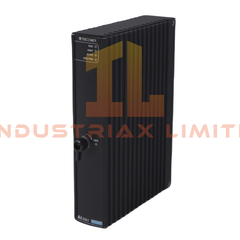
Honeywell FS-IOBUS-CPX12 I/O Bus Interconnection Cable The Honeywell FS-IOBUS-CPX12, also cataloged as the FS-IOBUS-CPX12 I/O Bus Interconnection Cable, operates as...
اقرأ المزيد
متاح في أيام العمل من الساعة 9:00 صباحًا إلى 6:00 مساءً
راسلنا عبر البريد الإلكتروني: sales2@industriaxplc.com
متاح 24/7 للاستفسارات والدعم
وصف
Honeywell FS-IOBUS-CPX12 I/O Bus Interconnection Cable
The Honeywell FS-IOBUS-CPX12, also cataloged as the FS-IOBUS-CPX12 I/O Bus Interconnection Cable, operates as a dedicated hardware component for controller-to-extension chassis data communication within Honeywell Fail Safe Controller (FSC) and Safety Manager systems.
Hardware Specifications
Parameter
Specification
Model
FS-IOBUS-CPX12
Brand
Honeywell
Product Type
I/O Bus Interconnection Cables
System Compatibility
Honeywell FSC and Safety Manager platforms
Primary Function
Controller Chassis (CPCHAS) to Extension I/O Chassis (IOCHAS) interconnection
Connector Type
Dual 34-pole female latch connectors
Cable Length
Approx. 3.4 m to 4.2 m
Characteristic Impedance
100 Ohm +/- 10%
Maximum Data Rate
100 Mbps
Propagation Delay
Less than 5.0 ns/m typical
Conductor Gauge
24 AWG to 26 AWG
Operating Temp
-20 deg C to +85 deg C
Low Temperature Option
PUR jacket option supports down to -40 deg C
Weight
Approx. 0.23 kg to 1.0 kg including shielding and packaging
Dimensions
Cable assembly; dimensions vary by cable routing and revision
Power Consumption
Passive cable assembly; no external power consumption
Origin
USA
Certifications
UL, CSA, VDE
Honeywell DCS and Safety Communication Interface
The FS-IOBUS-CPX12 provides physical signal transmission between controller and remote I/O chassis assemblies. The cable assembly maintains bus signal integrity through controlled impedance construction and shielded conductors.
In addition, the cable supports Honeywell FSC and Safety Manager cabinet expansion architectures where multiple I/O chassis require direct bus communication. The dual 34-pole latch connectors secure the electrical interface and reduce accidental disconnection during cabinet operation.
The FS-IOBUS-CPX12 installation follows Honeywell safety system wiring practices. Therefore, technicians must maintain proper cable routing, grounding, and separation from high-energy power conductors.
Channel Isolation and Process Control Signal Integrity
Honeywell safety and process control platforms require stable field communication paths between controller assemblies and I/O modules. The FS-IOBUS-CPX12 uses a shielded cable structure to reduce external electromagnetic interference during signal transmission.
Furthermore, Honeywell I/O architectures commonly integrate channel-to-channel isolation, 4-20 mA HART loop interfaces, and FOUNDATION Fieldbus or Profibus PA communication modules. The cable assembly itself provides the physical bus connection required for chassis-level communication rather than field instrument signal conversion.
Frequently Asked Questions
Q: What systems can use the Honeywell FS-IOBUS-CPX12 cable assembly? A: The FS-IOBUS-CPX12 supports Honeywell FSC and Safety Manager systems for CPCHAS to IOCHAS chassis interconnection.
Q: Does the FS-IOBUS-CPX12 require external power? A: No. The FS-IOBUS-CPX12 is a passive communication cable assembly and does not consume operating power.
Q: What installation factors affect FS-IOBUS-CPX12 signal performance? A: Proper cable routing, shield grounding, connector locking, and separation from high-voltage wiring affect communication signal quality.
Field Installation Guidelines
Verify the cable part number before installation and confirm compatibility with the target controller and I/O chassis configuration.
Install the cable between the designated CPCHAS controller chassis port and IOCHAS extension chassis interface.
Ensure both 34-pole latch connectors fully engage before system power-up.
Route the cable away from high-voltage power lines, motor cables, and sources of electromagnetic interference.
Maintain the original shielding structure and connect shield grounding according to Honeywell cabinet installation requirements.
Avoid sharp bending, excessive pulling force, or mechanical stress on the cable assembly.
Inspect connectors and cable jackets for physical damage before commissioning.
تحديد
rtl">
المزايا
موثوقية عالية في البيئات الصناعية
يدعم التشغيل المستمر، متوافق مع أنظمة PLC/DCS الرئيسية