وصف
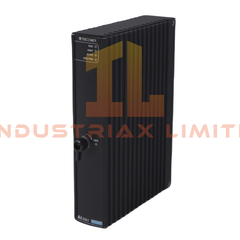
GE IS200VVIBH1CAB Vibration Input Terminal Board
Configured for high-speed vibration signal acquisition in GE Mark VI turbine control architecture, the GE IS200VVIBH1CAB (IS200VVIBH1CAB Vibration Input Terminal Board) provides direct electrical interface termination for proximity probes and accelerometers, enabling analog waveform capture and conditioning for machinery vibration analysis and protection logic execution.
The module routes up to 10 independent vibration input channels through isolated analog acquisition paths, supporting both eddy-current probe signals and piezoelectric accelerometer inputs with 16-bit conversion and high-frequency sampling for transient and steady-state rotor behavior monitoring.
Hardware Specifications
| Parameter |
Specification |
| Model |
IS200VVIBH1CAB |
| Brand |
GE |
| Origin |
USA |
| Weight |
0.25 kg |
| Dimensions |
160 mm x 120 mm x 25 mm |
| Operating Temp |
-30 deg C to +65 deg C |
| Power Consumption |
24 VDC excitation supply |
| Input Channels |
10 vibration probe inputs |
| Signal Types |
Proximity probes, accelerometers |
| Input Range |
±24 VDC |
| Resolution |
16-bit A/D conversion |
| Sampling Rate |
>10 kHz |
| Isolation |
Channel-to-channel isolation |
| Connectors |
Euro-style terminal blocks |
GE Mark VI Vibration Acquisition and Signal Isolation Architecture
The IS200VVIBH1CAB implements distributed vibration signal termination at the I/O boundary of the Mark VI control system, where analog signals from eddy-current proximity probes and accelerometers are conditioned prior to digitization. Each input channel is routed through isolated acquisition stages to minimize cross-channel coupling during high-frequency vibration events.
The 16-bit conversion pipeline supports high-resolution waveform reconstruction, enabling spectral analysis of rotor dynamics and bearing condition signatures. Channel-to-channel isolation reduces signal interference in multi-probe installations, particularly under high electromagnetic noise conditions within turbine enclosures. Probe excitation is provided via regulated 24 VDC supply rails, ensuring stable biasing for eddy-current displacement measurement systems.
Frequently Asked Questions (FAQ)
Q: Can proximity probes and accelerometers be mixed on the same board?
A: Yes. Each input channel supports configuration for either eddy-current proximity probes or piezoelectric accelerometers, depending on wiring and system configuration.
Q: What is the impact of channel-to-channel isolation on vibration signal integrity?
A: Isolation prevents electrical cross-talk between adjacent measurement channels, preserving waveform integrity during high-frequency vibration events.
Q: Does the board support hot-swap replacement during operation?
A: Hot-swap capability depends on rack implementation. Direct probe excitation and live analog signals require system-level isolation before maintenance.
Field Installation Guidelines
Install the board on a grounded and mechanically secured Mark VI I/O carrier with verified chassis continuity. Maintain strict separation between vibration signal wiring and high-voltage power conductors to prevent electromagnetic interference. Shielded probe cables must be terminated with single-point grounding at the cabinet entry. Ensure correct probe excitation polarity and voltage compatibility prior to energization. All terminal connections must be fully seated and mechanically secured to avoid micro-interruption under vibration. Avoid routing sensor leads in parallel with switching power lines over long distances.