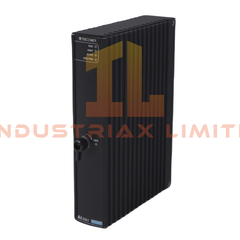
Bently Nevada 135M1467-01 Triaxial Vibration Sensor Module Configured for real-time vibration and temperature acquisition in WirelessHART condition monitoring networks, the...
اقرأ المزيد
Configured for real-time vibration and temperature acquisition in WirelessHART condition monitoring networks, the Bently Nevada 135M1467-01 (135M1467-01 triaxial vibration & temperature sensor) provides direct physical/electrical execution of multi-axis mechanical motion sampling and temperature transduction within a wireless industrial sensing topology.
Hardware Specifications
Parameter
Specification
Model
135M1467-01
Brand
Bently Nevada
Origin
USA
Operating Temp
-40 deg C to +85 deg C (typical for Ranger Pro class devices)
Approx. 5 Hz to 10 kHz (Z axis), 5 Hz to 4 kHz (X/Y axes)
Vibration Range
Up to ±20 g peak (typical platform limit)
Protection Class
Industrial sealed enclosure (IP-class dependent on configuration)
Mounting Method
Threaded or magnetic adapter dependent
Bently Nevada Rotor Dynamics Signal Integrity Characteristics
The acquisition front-end of the 135M1467-01 class devices is designed around MEMS-based tri-axis sensing elements with internal scaling calibration comparable to eddy-current probe normalization practices used in proximity systems. Signal conditioning logic applies digital gain mapping to maintain stable amplitude scaling across varying mechanical loading conditions. Cross-talk suppression is implemented at the sensor fusion layer to reduce axis coupling artifacts during high-energy vibration events, particularly in radial-to-axial excitation transfer scenarios typical in rotating shaft assemblies. Wireless packetization is synchronized to reduce phase drift in multi-node rotor dynamic datasets.
Frequently Asked Questions (FAQ)
Q: Does the 135M1467-01 support synchronous multi-node sampling across WirelessHART networks? A: The device supports time-scheduled transmission slots defined by the WirelessHART stack, enabling network-level synchronization rather than hardware-level sample clock alignment.
Q: What happens to vibration data during battery replacement? A: The sensor does not support hot-swap power continuity; internal memory buffering is used to retain short-term data depending on configuration and transmission interval.
Q: Can the device operate with mixed-axis failure or partial sensor degradation? A: Axis-level diagnostics typically isolate faulty MEMS channels, and remaining axes continue reporting within degraded operational mode.
Field Installation Guidelines
Mount the sensor on a rigid, clean metallic surface with minimal structural damping interference. Ensure full mechanical coupling between base and machine housing using threaded engagement or approved magnetic adapters. Avoid mounting near high electromagnetic interference sources such as VFD output cabling. Maintain clear wireless propagation paths where possible to gateway nodes. Verify correct orientation alignment for X, Y, Z axis reference consistency prior to commissioning. Do not apply excessive torque beyond manufacturer mechanical coupling limits to prevent internal MEMS stress distortion.
تحديد
rtl">
المزايا
موثوقية عالية في البيئات الصناعية
يدعم التشغيل المستمر، متوافق مع أنظمة PLC/DCS الرئيسية