
Vale and ABB Expand Digital Transformation Across Brazilian Iron Ore Operations
, 6 دقيقة وقت القراءة
, 6 دقيقة وقت القراءة
The agreement builds on the experience gained at Vale’s Conceição II Model Plant in Itabira, Minas Gerais. Rather than treating the facility as an isolated technology project, Vale intends to use it as a practical reference for modernising other processing plants. From an industrial automation perspective, this approach is significant. A successful digital plant cannot depend only on individual smart devices or software platforms. The greater value comes from connecting instrumentation, control systems, operational data and engineering processes into a coordinated production environment.
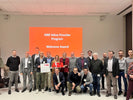
Vale and ABB have signed a strategic alliance aimed at accelerating the adoption of automation, artificial intelligence (AI), digitalisation and integrated IT/OT technologies across Vale’s iron ore operations in Brazil.
The agreement builds on the experience gained at Vale’s Conceição II Model Plant in Itabira, Minas Gerais. Rather than treating the facility as an isolated technology project, Vale intends to use it as a practical reference for modernising other processing plants.
From an industrial automation perspective, this approach is significant. A successful digital plant cannot depend only on individual smart devices or software platforms. The greater value comes from connecting instrumentation, control systems, operational data and engineering processes into a coordinated production environment.
Inaugurated in June 2026, the Conceição II Model Plant forms part of Vale’s Mining of the Future strategy. The facility has an annual processing capacity of approximately 11.2 million tonnes and incorporates a broad range of automation and digital technologies.
ABB participated as a consultant, systems integrator and technology provider. Its role covered the development, validation, interoperability and scalability of automation, digitalisation and integrated IT/OT solutions.
More than 100 monitoring cameras were installed throughout the complex, while more than 7,000 instruments were automated. These systems include measurement devices and sensors designed to provide more detailed information about operating conditions.
The plant also applies data intelligence to more than 400 process variables across the ore-processing workflow. This provides operators and engineering teams with a larger information base for process control, performance monitoring and fault prediction.
One of the most notable aspects of the project is the shift from conventional automation toward data-driven process optimisation.
Traditional automation primarily focuses on maintaining process variables within predefined operating limits. The Conceição II model extends this concept by using collected process information to identify abnormal conditions, anticipate potential failures and reduce the probability of unplanned shutdowns.
This distinction matters in large-scale mineral processing. A single equipment failure can affect several interconnected process stages. Therefore, predictive analysis can provide value before an actual failure occurs, particularly when equipment condition, process performance and historical operating data can be analysed together.
In my view, this is where AI has the greatest practical value in industrial environments: not as a replacement for established control logic, but as an additional decision-support layer that helps engineering and operations teams recognise patterns that conventional control systems may not identify easily.
The Conceição II Model Plant has already produced measurable results since its implementation in 2024.
Vale reports a 25% increase in productivity, while premium ore production for direct reduction increased by 40%. At the same time, iron losses in tailings decreased by 26%.
These figures demonstrate that digital transformation can affect physical production performance when technology is integrated directly into the operating process.
The reduction in manual field intervention is also important. Fewer routine interventions can reduce employee exposure to potentially hazardous operating areas while allowing personnel to concentrate on higher-value inspection, maintenance and engineering activities.
The strategic alliance now moves the project from individual plant implementation toward broader replication.
Vale plans to gradually extend technologies and operating practices demonstrated at Conceição II to other iron ore processing facilities. This creates an opportunity to establish more consistent automation architectures, data structures, operating methods and digital engineering practices across multiple sites.
However, replication should not mean simply copying the same hardware configuration from one plant to another. Each processing facility has different equipment, process characteristics, control architectures and operational constraints.
A more effective strategy is to standardise the underlying technology framework while allowing individual plants to retain the engineering flexibility required by their processes.
As digital technologies expand, interoperability becomes increasingly important.
Mining facilities typically contain equipment from different generations and manufacturers. PLCs, DCS platforms, instrumentation, drives, historians, condition-monitoring systems and enterprise applications must exchange information without compromising control performance or cybersecurity.
ABB's involvement as a systems integrator therefore has significance beyond the supply of automation hardware. The ability to connect operational technology with information technology determines whether plant data can actually support production decisions.
For Vale, a scalable IT/OT architecture can also provide a foundation for future applications involving predictive maintenance, process optimisation, energy management and AI-based analytics.

Safety is another major objective of the partnership.
The reduction of manual intervention means that employees may spend less time performing routine activities in operational areas. Combined with cameras, sensors and automated monitoring, this creates opportunities to observe equipment and process conditions from safer locations.
AI can further support this model by analysing large quantities of operational information and identifying unusual conditions. Nevertheless, AI should complement established safety systems rather than replace them.
Safety instrumented functions, interlocks, alarms and established operating procedures must continue to provide deterministic protection where required. AI is better positioned as a monitoring, prediction and decision-support technology.
The partnership also connects digitalisation with sustainability objectives.
Better process control can help plants use energy and raw materials more efficiently. Reducing iron losses in tailings, for example, can improve resource utilisation while increasing the value obtained from processed ore.
Likewise, improved equipment monitoring can help maintenance teams identify deteriorating operating conditions earlier. This can reduce unnecessary equipment operation, avoid some unplanned events and potentially extend maintenance intervals where engineering assessments support such decisions.
Digitalisation therefore has a broader role than simply increasing production. When implemented correctly, it can connect productivity improvements with resource efficiency and environmental performance.
The Conceição II project illustrates an important direction for the mining industry: digital transformation must produce measurable operational outcomes.
Installing thousands of instruments or collecting hundreds of process variables does not automatically create a digital plant. The real value appears when data supports better control decisions, predictive maintenance, safer working practices and improved resource utilisation.
Vale's decision to use Conceição II as a reference model is therefore technically significant. It creates a structured pathway for transferring proven automation and digitalisation practices to other facilities while allowing each site to adapt the implementation to its own process requirements.
The expanded partnership between Vale and ABB represents a move toward more standardised and connected mining operations.
Automation, electrification, AI and digitalisation are increasingly becoming interconnected parts of industrial architecture rather than separate technology projects. For large mining companies, this integration can provide a foundation for improving production predictability while reducing manual exposure and resource losses.
The next challenge will be scaling these technologies without creating unnecessary architectural complexity. Standardised communication, cybersecurity, data governance, maintainable automation platforms and clearly defined operational responsibilities will become increasingly important as more Vale facilities adopt the model.
The Conceição II experience provides a useful starting point. Its reported production and resource-efficiency improvements show how industrial automation can generate tangible results when instrumentation, control, data intelligence and operational processes are developed as one integrated system.

Emerson Electric (EMR) appears broadly fairly valued after a 69.8% three-year gain. This analysis examines its P/E valuation, BP Shah Deniz automation contract, industrial digitalization...

AI benchmark scores provide useful performance indicators, but industrial deployment requires deeper validation. This article explains why engineers must evaluate AI systems through operational context,...

Rockwell Automation and Actemium use AI-driven RtCOP technology with PlantPAx DCS to optimize industrial refrigeration systems, achieving 17% energy savings and improving operational efficiency in...