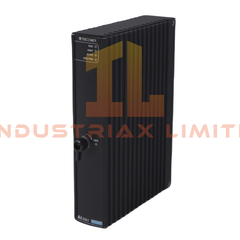
GE IS200ECTBG2A Exciter Contact Terminal Board Configured for contact signal termination and relay control execution in GE EX2100/EX2100e excitation control...
Baca selengkapnya
Dukungan Pengembalian Dana, Layanan 7X24jam, Hubungi kami .
Hubungi kami: +86 135 995 07613
Tersedia pada hari kerja antara pukul 09.00 hingga 18.00
Email kami: sales2@industriaxplc.com
Tersedia 24/7 untuk pertanyaan dan dukungan
Keterangan
GE IS200ECTBG2A Exciter Contact Terminal Board
Configured for contact signal termination and relay control execution in GE EX2100/EX2100e excitation control systems, the GE IS200ECTBG2A (IS200ECTB Exciter Contact Terminal Board) provides direct physical/electrical execution for auxiliary contact inputs, trip relay outputs, and general-purpose relay interfaces in simplex excitation architectures.
Hardware Specifications
Parameter
Specification
Model
IS200ECTBG2A
Brand
GE
Origin
United States
Weight
0.34 kg
Dimensions
150 x 76 x 90 mm
Operating Temp
0 deg C to +60 deg C
Power Consumption
Relay and contact interface board power consumption
Module Type
Exciter Contact Terminal Board (ECTB)
Series
EX2100
Operating Mode
Simplex mode only
Form Factor
Exciter cabinet chassis-mounted terminal board
Relay Control Voltage
24 VDC
Customer Power Input
125 VDC
Wetting Voltage
70 VDC (63-84 VDC range)
Relay Configuration
2 Form-C trip relays and 4 Form-C general-purpose relays
Auxiliary Inputs
6 powered/wetted auxiliary contact inputs
Relay Contact Isolation
500 VDC channel-to-earth isolation
Protection Features
Conformal coating and LED status indicators
EtherNet/IP and Industrial Control Signal Interface Characteristics
The IS200ECTBG2A is designed for GE EX2100 excitation control architectures and performs discrete signal termination between field contacts, relay circuits, and the excitation controller interface. The board routes auxiliary contact inputs and relay outputs associated with generator breaker monitoring, lockout functions, and auxiliary sequencing circuits.
The EX2100 ECTB interface uses dedicated relay and contact circuits rather than analog measurement channels. The board supports simplex execution only, with the G2 configuration identifying single-channel operation. Relay outputs include two Form-C trip relays for protection-related circuits and four Form-C general-purpose relays for auxiliary control functions.
The module follows GE industrial control hardware practices including conformal PCB coating, electrical isolation between relay circuits and earth reference, and compatibility with excitation cabinet wiring structures. The contact interface design supports discrete I/O density scaling within the EX2100 excitation platform.
Frequently Asked Questions
Q: What operating architecture is supported by the IS200ECTBG2A? A: The IS200ECTBG2A supports simplex mode operation only and is configured for single-channel EX2100 excitation system installations.
Q: What type of relay outputs are provided on the ECTB board? A: The board provides two Form-C trip relay outputs and four Form-C general-purpose Form-C relay outputs for discrete control circuits.
Q: What field input signals can be connected to the IS200ECTBG2A? A: The board supports six powered/wetted auxiliary contact inputs, including monitored signals such as generator breaker and lockout status contacts.
Field Installation Guidelines
Install the IS200ECTBG2A in the designated EX2100 excitation cabinet location and verify terminal assignments against the GEH-6632 instruction manual before field wiring.
Use properly rated field wiring for 125 VDC customer power circuits and relay contact connections. Separate low-level signal wiring from high-current switching conductors to reduce electrical interference.
Terminate cable shields according to cabinet grounding practices where shielded wiring is applied. Verify relay contact polarity, auxiliary input wiring, and protective earth connections before applying system power.
Inspect terminal blocks, board connectors, and conformal-coated surfaces during installation to ensure no mechanical damage or contamination is present.