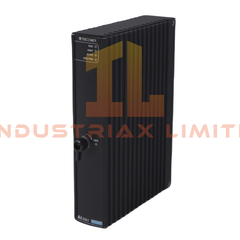
Yokogawa F3YD18-0N Digital Output Module The Yokogawa F3YD18-0N, also cataloged as the F3YD18 Digital Output Module, operates as a dedicated...
Baca selengkapnya
Dukungan Pengembalian Dana, Layanan 7X24jam, Hubungi kami .
Hubungi kami: +86 135 995 07613
Tersedia pada hari kerja antara pukul 09.00 hingga 18.00
Email kami: sales2@industriaxplc.com
Tersedia 24/7 untuk pertanyaan dan dukungan
Keterangan
Yokogawa F3YD18-0N Digital Output Module
The Yokogawa F3YD18-0N, also cataloged as the F3YD18 Digital Output Module, operates as a dedicated hardware component for switching discrete electrical loads via transistor outputs within FA-M3 platforms.
Hardware Specifications
Parameter
Specification
Model
F3YD18-0N
Brand
Yokogawa
Origin
Japan
Module Type
Digital Output Module (Transistor Output)
Number of Outputs
18 points
Output Type
Sink type (Open collector)
Rated Load Voltage
12 VDC to 24 VDC
Operating Load Voltage Range
10.2 VDC to 26.4 VDC
Maximum Load Current
0.1 A per point (1.8 A per module)
Maximum Inrush Current
0.4 A or less
Leakage Current when OFF
0.1 mA or less
Residual Voltage (ON Voltage)
1.0 V or less
Surge Killer
Zener diode
Isolation Method
Photocoupler isolation
Power Consumption
70 mA (at 5 VDC from internal backplane)
Dimensions
90 x 30 x 25 mm
Weight
Approx. 90 g
Operating Temp
-20 to 70 degC
Channel-to-Channel Isolation and Loop Performance
The hardware topology integrates individual channel-to-channel isolation vectors implemented via high-speed photocoupler circuitry. This electrical barrier decouples the internal 5 VDC system logic from the external 24 VDC field loop power supply, preventing ground loop circulation and suppressing transient voltage spikes. Field-side logic execution routes through an open-collector sink structure, where integrated Zener diode networks suppress inductive kickback voltages generated by external inductive loads.
Frequently Asked Questions
Q: Can the output channels be wired in parallel to drive a load greater than 0.1 A?
A: No. Internal propagation delay variations (0.1 ms to 0.3 ms switching thresholds) prevent simultaneous switching across channels. Paralleling outputs causes temporary single-channel overcurrent conditions, leading to thermal degradation or immediate output transistor failure.
Q: What are the restrictions regarding hot-swapping this module during system operation?
A: The FA-M3 backplane architecture does not support online hot-swapping for this hardware classification. Removing or inserting the module while the base unit is energized can induce backplane bus communication faults, corrupt internal register data, or trigger unexpected state transitions on adjacent I/O modules.
Field Installation Guidelines
Power De-energization: Terminate all primary system power before inserting or removing the module from the FA-M3 base unit to prevent mechanical arcing at the backplane connectors.
Conductor Separation: Route external 12-24 VDC output signal lines in separate conduits or cable trays distinct from high-voltage AC power distribution wiring to prevent electromagnetic induction.
Terminal Torque and Insertion: For spring-clamp terminal configurations, ensure solid or ferruled conductors are fully inserted to the stop depth to maintain continuous gas-tight electrical contact under industrial vibration profiles.
Inductive Load Suppression: While internal Zener diodes provide transient absorption, high-duty inductive loads exceeding 0.4 A inrush should be paired with an external flyback diode installed directly across the load terminals.