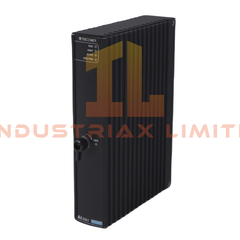
Yokogawa A1BR4D-05 Terminal Board Configured for RTD signal termination in CENTUM VP and CENTUM CS 3000 I/O architectures, the Yokogawa...
Baca selengkapnya
Dukungan Pengembalian Dana, Layanan 7X24jam, Hubungi kami .
Hubungi kami: +86 135 995 07613
Tersedia pada hari kerja antara pukul 09.00 hingga 18.00
Email kami: sales2@industriaxplc.com
Tersedia 24/7 untuk pertanyaan dan dukungan
Keterangan
Yokogawa A1BR4D-05 Terminal Board
Configured for RTD signal termination in CENTUM VP and CENTUM CS 3000 I/O architectures, the Yokogawa A1BR4D-05 (A1BR4D Terminal Board) provides direct physical/electrical execution for resistance temperature detector field wiring interfacing across Yokogawa DCS platforms.
Suffix Breakdown & Model Matrix
A1BR4D: RTD input terminal board base model for analog temperature signal termination
-0: Fixed configuration identifier (standardized base allocation)
5: Basic variant, no explosion protection
Hardware Specifications
Parameter
Specification
Model
A1BR4D-05
Brand
Yokogawa
Origin
Japan
Weight
Approx. 0.30 kg (terminal block assembly)
PowerConsumption
Passive module (no direct power consumption)
Channel Capacity
16 RTD input channels
Wiring Type
Pressure clamp terminal
Compatible I/O Module
AAR145 RTD Input Module
Compatible Cable
AKB335 Signal Cable
Mounting
DIN rail mounting
Yokogawa RTD Signal Interface Characteristics
Yokogawa Field Input/Output terminal architecture implements channel-level segregation for RTD measurement integrity within DCS acquisition chains. The A1BR4D-05 maintains structured separation between field wiring and analog input modules, supporting high-density temperature acquisition via 2-wire, 3-wire, and 4-wire RTD configurations depending on system design.
Within CENTUM VP I/O topology, RTD resistance conversion is handled at the module level, while the terminal board provides passive distribution and mechanical termination. Channel-to-channel wiring layout minimizes cross-coupling paths in dense cabinet configurations, particularly in multi-rack CENTUM CS 3000 deployments. Signal integrity is preserved through controlled impedance routing and standardized terminal spacing.
Frequently Asked Questions
Q1: Does the A1BR4D-05 support hot-swap operation? A1: The terminal board is passive; hot-swap capability depends on the connected AAR145 I/O module and system rack configuration, not the terminal board itself.
Q2: Is channel isolation implemented on the terminal board? A2: Electrical isolation is implemented at the I/O module level. The terminal board provides physical separation but no active galvanic isolation circuitry.
Q3: Can 2-wire and 3-wire RTD sensors be mixed on the same board? A3: Mixing is possible only if the associated I/O module supports multiple RTD wiring methods and channel configuration allows independent setup per input channel.
Field Installation Guidelines
Maintain separation between RTD signal cables and high-voltage or switching power lines
Ensure shield termination is grounded at a single control cabinet reference point to avoid ground loop formation
Verify correct wire pairing according to RTD type (2-wire, 3-wire, 4-wire) before terminal insertion
Apply uniform torque/pressure on clamp terminals to avoid intermittent resistance readings
Route cables with controlled bend radius to prevent mechanical stress on terminal points
Ensure DIN rail mounting is mechanically locked to avoid vibration-induced loosening in cabinet environments